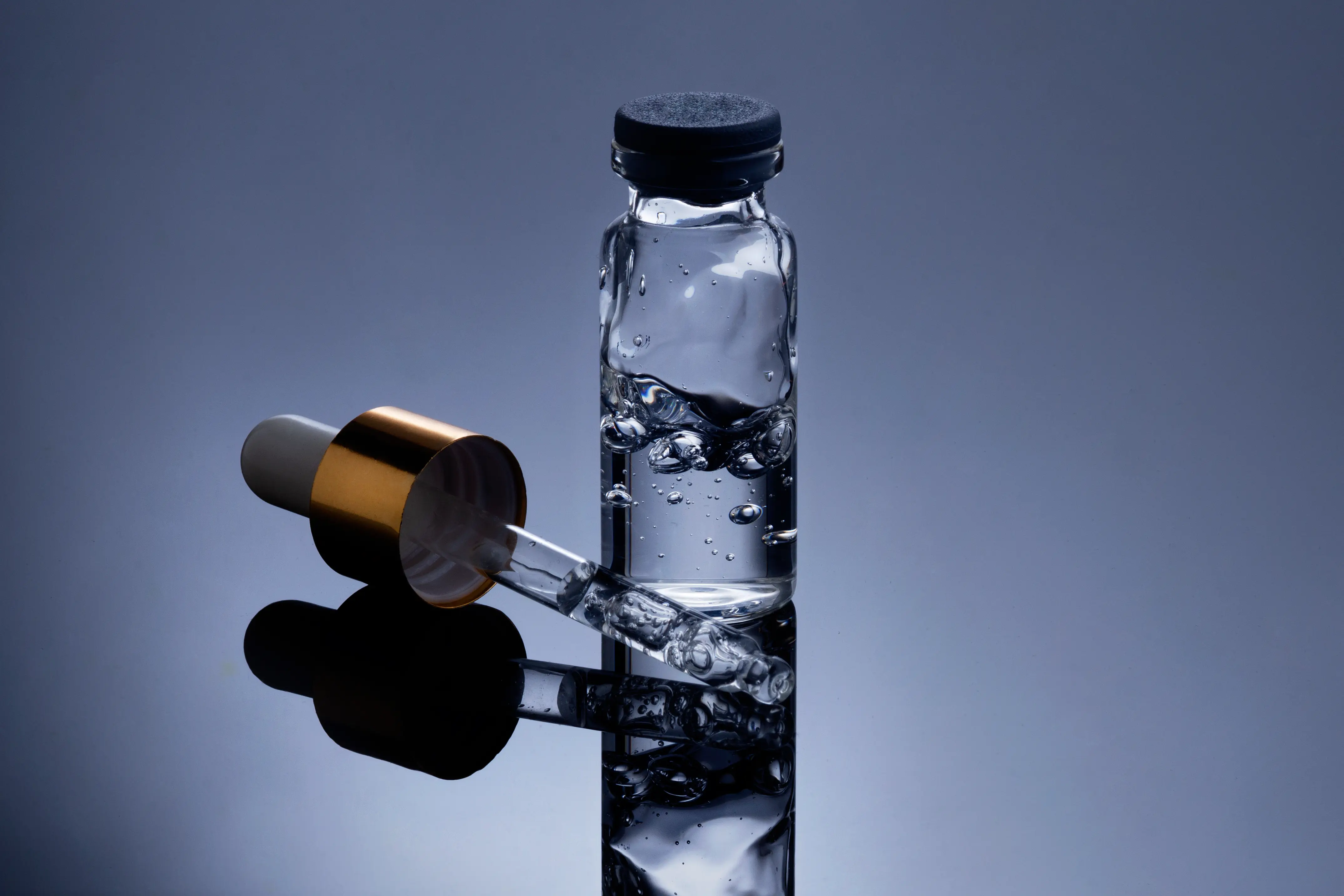
If you spend any time around peptide research circles, BPC-157 is probably the first compound that comes up. It sits at the centre of more than 100 peer reviewed publications, it has a three decade track record in preclinical models, and it is one of the few peptides where the underlying biology has been mapped out across multiple independent labs. But there is also a lot of noise around it, so this guide sticks to what has actually been published and replicated.
Where BPC-157 Comes From
BPC stands for Body Protection Compound. The number refers to its identifying designation within the research literature. Your stomach lining produces a protein that protects itself from the acid it sits in every day. In the early 1990s, researchers at the University of Zagreb isolated a 15 amino acid fragment of that protein and found it retained much of the protective activity of the whole molecule.
The synthetic version used in research is a pentadecapeptide with the sequence Gly-Glu-Pro-Pro-Pro-Gly-Lys-Pro-Ala-Asp-Asp-Ala-Gly-Leu-Val, and it carries a molecular weight of roughly 1419 Daltons. Unlike many peptides that break down within minutes in the bloodstream, BPC-157 appears to be remarkably stable in gastric conditions, which makes sense given where the parent protein evolved to work.
What the Research Shows
The published literature on BPC-157 spans gastroenterology, orthopaedics, neuroscience, and vascular biology. Rather than try to cover everything, it is more useful to focus on the areas where there is the most consistent evidence.
Tissue Repair and Tendon Healing
This is the area with the deepest body of evidence. Multiple rodent studies have shown accelerated healing of transected tendons, torn muscles, and damaged ligaments following BPC-157 administration. A 2014 study published in Molecules found that BPC-157 treatment led to upregulation of growth hormone receptor expression in tendon fibroblasts at both the mRNA and protein level (Chang et al., PMC6271067). The effect was dose dependent and time dependent, and the addition of growth hormone to BPC-157 treated fibroblasts further increased cell proliferation through the JAK2 signalling pathway.
In plain terms: BPC-157 appears to make tendon cells more responsive to the body's own growth signals, and it does this through a well characterised receptor pathway that other researchers can test and verify.
A 2025 systematic review in the orthopaedic sports medicine literature compiled findings from across the preclinical evidence base and noted improvements in fibroblast migration, cell survival under stress conditions, and overall repair quality in BPC-157 treated groups compared to controls (Vasireddi et al., PMC12313605).
Gut Protection
Given that BPC-157 originates from a gastric protein, it is no surprise that the gut is where some of the earliest and most consistent findings appear. Rodent models of induced ulcers, inflammatory bowel conditions, and NSAID related gut damage have all shown reduced lesion size and accelerated mucosal healing with BPC-157 treatment. A 2018 review in Current Pharmaceutical Design summarised the gastric cytoprotection literature and noted that BPC-157 appeared to counteract both the initiation and progression of gastric lesions across multiple experimental models (Sikiric et al., PMID 29879879).
The proposed mechanism here overlaps with the vascular findings below. By promoting blood vessel growth in the damaged gut lining, BPC-157 may help restore the blood supply that feeds mucosal repair.
Blood Vessel Formation
One of the better understood mechanisms behind BPC-157 is its effect on angiogenesis, the formation of new blood vessels. The peptide activates vascular endothelial growth factor receptor 2 (VEGFR2), which triggers a downstream cascade through PI3K, Akt, and endothelial nitric oxide synthase (eNOS). The end result is increased nitric oxide production, which relaxes blood vessels and supports the formation of new capillary networks in damaged tissue.
What makes this finding particularly interesting is that BPC-157 appears to promote angiogenesis through more than one route. In addition to the VEGF dependent pathway, research has identified a VEGF independent route through Src kinase and caveolin-1 that also converges on eNOS activation (Hsu et al., 2020). Having two parallel pathways to the same outcome may explain why the angiogenic effect appears so robust across different tissue types and injury models.
Nitric Oxide System
The nitric oxide connection runs through much of the BPC-157 literature. Beyond angiogenesis, the peptide's interaction with the NO system has been linked to its reported effects on blood pressure regulation, neural protection, and anti-inflammatory activity. In rodent models, BPC-157 has been shown to counteract both excessive NO production (which drives inflammation) and insufficient NO availability (which impairs healing), suggesting a modulatory rather than one directional effect.
What About Human Data?
This is where the conversation gets more measured. Despite decades of animal research, human clinical data on BPC-157 remains limited. As of early 2026, only three human studies have been published, all of them pilot studies with small sample sizes.
The most notable is a 2025 pilot study by Lee and Burgess, which administered intravenous BPC-157 at doses up to 20mg in two healthy adults (PMID 40131143). The peptide was well tolerated with no adverse effects reported, and plasma levels returned to baseline within 24 hours. But two subjects is not a clinical trial. It is a safety signal at best.
The other two published human studies examined intra-articular injection for knee pain (16 patients, 2021) and intravesicular administration for interstitial cystitis (12 patients, 2024). Both were small pilot studies published in Alternative Therapies in Health and Medicine.
This is the single biggest caveat in all BPC-157 research: the animal data is extensive and the mechanistic understanding is genuinely detailed, but the human evidence has not caught up.
Common Research Protocols
In the published animal literature, BPC-157 is typically administered at doses ranging from 6 to 50 micrograms per kilogram of body weight, once or twice daily. Routes of administration have included subcutaneous injection (the most common), intramuscular injection, intraperitoneal injection, and oral administration. One of the unusual properties of BPC-157 is that it appears to retain biological activity when given orally, likely owing to its stability in gastric acid. Most animal studies run between 7 and 28 days depending on the injury model being studied.
For reconstituted peptide research, standard practice involves adding bacteriostatic water to the lyophilised powder and storing the solution refrigerated between 2 and 8 degrees Celsius. Reconstituted BPC-157 is generally considered stable for up to 30 days under these conditions. Some vendor guidelines suggest frozen storage at minus 20 degrees Celsius may extend usable life, though peer reviewed stability data for reconstituted frozen peptide solutions is limited, and repeated freeze thaw cycles should be avoided.
What BPC-157 is Not
It is worth being direct about the boundaries. BPC-157 is not approved for human therapeutic use by any regulatory body. It is classified as a research compound. The claims you see on social media and bodybuilding forums often run well ahead of what the published science supports.
What BPC-157 does have is a serious and growing body of mechanistic evidence, a plausible set of biological pathways that have been independently verified, and an unusually broad range of tissue types where protective effects have been observed in animal models. Whether those findings translate to humans at the same magnitude is an open question that properly designed clinical trials will need to answer.
Why Purity Matters
Because BPC-157 is a synthetic peptide manufactured through solid phase peptide synthesis, the quality of the final product depends entirely on the manufacturing process. Impurities can include truncated sequences (where the chain was not completed), deletion peptides (where one or more amino acids were skipped), and residual solvents from the synthesis process.
HPLC (High Performance Liquid Chromatography) testing is the standard method for verifying peptide purity. A proper Certificate of Analysis should show the HPLC chromatogram with a clear dominant peak representing the target sequence and minimal secondary peaks. Mass spectrometry confirms that the molecular weight matches the expected value for the full 15 amino acid chain.
If a supplier cannot provide batch specific analytical data, that tells you something. A recycled stock PDF is not a Certificate of Analysis. It is a marketing document.
The Bottom Line
BPC-157 occupies a genuinely interesting position in peptide research. The preclinical evidence is stronger than most compounds in this space, the mechanisms are increasingly well characterised, and the peptide's stability gives it practical advantages that many shorter sequences lack. At the same time, the gap between animal data and human evidence remains real. Researchers working with BPC-157 should read the primary literature, understand the limitations, and demand proper analytical documentation for any compound they use in their work.
References
- Chang CH, Tsai WC, Hsu YH, Pang JHS. (2014). Pentadecapeptide BPC 157 Enhances the Growth Hormone Receptor Expression in Tendon Fibroblasts. Molecules. 19(11):19066-19077. PMC6271067.
- Sikiric P, et al. (2018). Novel Cytoprotective Mediator, Stable Gastric Pentadecapeptide BPC 157. Vascular Recruitment and Gastrointestinal Tract Healing. Curr Pharm Des. 24(18):1990-2001. PMID: 29879879.
- Hsu YC, et al. (2020). Modulatory effects of BPC 157 on vasomotor tone and the activation of Src-Caveolin-1-endothelial nitric oxide synthase pathway. Sci Rep. 10:17078. PMC7555539.
- Vasireddi N, et al. (2025). Emerging Use of BPC-157 in Orthopaedic Sports Medicine: A Systematic Review. HSS J. PMC12313605.
- McGuire FP, et al. (2025). Regeneration or Risk? A Narrative Review of BPC-157 for Musculoskeletal Healing. Curr Rev Musculoskelet Med. 18(12):611-619. PMC12446177.
- Yuan C, et al. (2026). From Regeneration to Analgesia: The Role of BPC-157 in Tissue Repair and Pain Management. Int J Mol Sci. 27(6):2876.
- Lee J, Burgess D. (2025). Safety of Intravenous Infusion of BPC157 in Humans: A Pilot Study. Altern Ther Health Med. 31(5):20-24. PMID: 40131143.