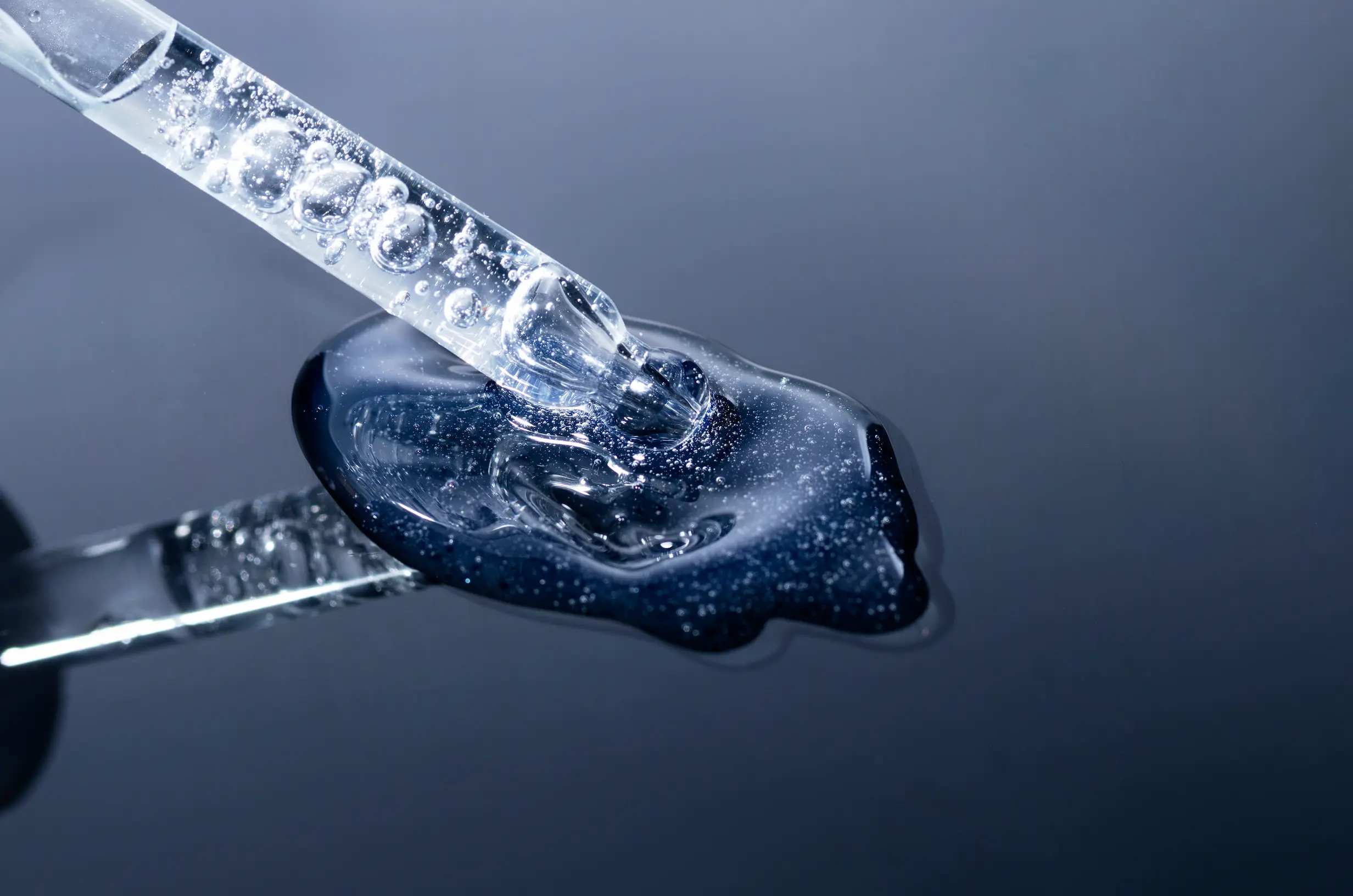
If you have come across GHK-CU on a serum ingredient list or in a peptide therapy discussion, the name alone does not reveal much. GHK-CU is a naturally occurring copper-bound tripeptide found in human plasma, and it functions as both a signalling molecule and a copper-delivery system linked to skin repair, collagen remodelling, and reduced inflammation. In skincare, it appears under the INCI name Copper Tripeptide-1.
The reason this peptide attracts so much attention is that its concentrations in the body decline with age, and research suggests it plays a meaningful role in how tissues heal and regenerate. That creates an obvious appeal for anyone interested in skin ageing, wound recovery, or hair health.
What we aim to do in this guide is separate the claims that are well supported by cosmetic and dermatological evidence from those that remain preclinical or speculative. Whether you are considering a GHK-CU serum for fine lines or reading about injectable peptide protocols, the distinctions matter.
What GHK-CU Is and Why It Matters
GHK-CU is a small peptide-metal complex consisting of three amino acids bound to a copper ion. Its biological relevance stems from its natural presence in human tissues and its role as a copper-delivery and repair-signalling molecule, first identified in the early 1970s.
The Structure of GHK and Copper
GHK stands for glycyl-L-histidyl-L-lysine, a tripeptide made up of glycine, histidine, and lysine. When this peptide binds to a copper (II) ion (Cu²⁺), it forms the complex we call GHK-CU.
The copper component is not incidental. Copper is an essential trace mineral required by enzymes such as lysyl oxidase, which cross-links collagen and elastin to stabilise connective tissue. GHK has a strong natural affinity for copper, and the bound form delivers it in a way that is biologically usable while reducing copper's potential to generate damaging free radicals. In practice, the peptide acts as a controlled copper-delivery vehicle rather than flooding tissue with unbound metal ions.
Other Names You May See on Labels
Labelling varies considerably across products and contexts. In cosmetic ingredient lists, GHK-CU is most reliably identified as Copper Tripeptide-1. You may also encounter it written as GHK Cu, Cu-GHK, or simply "copper peptide" in marketing materials.
Be cautious with the term "copper peptides" used broadly. Other copper peptide compounds exist, including AHK-Cu (copper tripeptide-3), which has distinct properties. Confirming the INCI name on the back of a product is the quickest way to verify you are getting GHK-CU specifically.
Where It Is Found Naturally in the Body
GHK-CU is present in human plasma, saliva, and urine. Plasma concentrations are often cited as approximately 200 µg/L in younger adults, declining to roughly 80 µg/L in older adults. This age-related decline is one reason the peptide has attracted interest in anti-ageing research, as it suggests a reduced capacity for the repair processes GHK-CU supports.
How Loren Pickart First Identified It
The discovery traces back to the early 1970s, when researcher Loren Pickart observed that a factor in human serum could encourage aged liver cells to behave more like younger tissue. Subsequent work isolated this factor as the GHK tripeptide and established its copper-binding properties. Pickart's foundational research remains widely cited and set the stage for decades of investigation into GHK-CU's role in tissue repair and regeneration.
How It Works in Skin and Tissue Repair
GHK-CU influences skin and tissue through multiple pathways, including copper delivery to enzyme systems, stimulation of structural protein synthesis, broad modulation of gene expression, and activation of wound repair cascades.
Copper Delivery and Cellular Signalling
The peptide's primary mechanism is delivering copper to cells in a controlled, biologically compatible form. Once copper reaches its target enzymes, it supports processes critical to tissue integrity.
Lysyl oxidase, for example, depends on copper to cross-link collagen and elastin fibres. Superoxide dismutase, a key antioxidant enzyme, also requires copper to neutralise reactive oxygen species. By supplying copper without the oxidative risks of free copper ions, GHK-CU acts as both a delivery agent and a protective buffer.
Beyond simple copper transport, GHK-CU appears to function as a signalling molecule in its own right, triggering cellular responses that go beyond what copper alone would achieve.
Collagen, Elastin, and Glycosaminoglycan Support
One of the most consistently reported effects of GHK-CU is the stimulation of collagen synthesis, particularly type I collagen. It also promotes elastin production and glycosaminoglycan synthesis, including molecules like decorin that help organise collagen fibres.
In practical terms, these are the structural components that give skin its firmness, elasticity, and hydration capacity. Skin fibroblasts treated with GHK-CU in laboratory settings show increased output of these extracellular matrix components. This is the mechanistic basis for the firmer, more resilient skin that users of topical copper peptide products often report over several weeks of consistent use.
Gene Expression, Oxidative Stress, and Inflammation
Research into GHK-CU's effects on gene expression has revealed a remarkably broad influence. Reviews report that the peptide can up-regulate or down-regulate a substantial number of human genes at certain thresholds. Many of these genes are involved in antioxidant defence, DNA repair, and anti-inflammatory pathways.
On the antioxidant side, GHK-CU supports the production of antioxidant enzymes including superoxide dismutase. On the inflammation side, it appears to help modulate inflammatory signalling, reducing inflammation without suppressing the immune response entirely.
It is worth noting that much of this gene-expression data comes from in-vitro and computational analyses. Treat it as hypothesis-supporting context rather than direct proof of clinical outcomes.
Tissue Remodelling and Wound Repair Pathways
GHK-CU is repeatedly linked to tissue remodelling processes in the scientific literature. It influences matrix metalloproteinases, the enzymes responsible for breaking down and reorganising extracellular matrix during wound healing.
The peptide also supports angiogenesis (new blood vessel formation) and the activity of growth factors involved in skin regeneration. These combined effects make it relevant to wound repair at multiple stages, from initial inflammation through to tissue rebuilding.
In preclinical wound healing models, GHK-CU has shown the ability to accelerate wound closure and improve the quality of repaired tissue. Translating those findings to real-world topical use is where the evidence becomes more nuanced, and expectations should remain grounded.
Main Benefits for Skin, Scarring, and Ageing
The strongest consumer-facing evidence for GHK-CU centres on gradual improvements in skin appearance. These include measurable changes in wrinkle depth, firmness, and skin density over multi-week treatment windows, with the most reliable data coming from topical formulations.
Fine Lines, Wrinkles, and Skin Firmness
Small human studies have reported visible reductions in fine lines and wrinkles with regular topical use of GHK-CU products. One frequently cited trial involved 41 women using a GHK-CU eye cream over 12 weeks, with the copper peptide formulation outperforming both placebo and a vitamin K comparison cream on signs of photodamage around the eyes.
Improvements in skin firmness and skin thickness are among the more consistently measured outcomes. These results align with the peptide's mechanism of boosting collagen production and extracellular matrix components. In our experience reviewing the literature, the most realistic expectation is gradual, cumulative improvement rather than anything dramatic in the first few days.
Barrier Support, Hydration, and Resilience
GHK-CU supports glycosaminoglycan synthesis, which has a direct bearing on the skin's ability to retain moisture. Improved skin hydration and a stronger skin barrier are commonly reported benefits in both clinical assessments and user feedback.
Skin resilience, meaning the capacity to recover from irritation or environmental stress, is another area where consistent GHK-CU use appears to make a noticeable difference. This makes it particularly appealing for those whose routines already include potentially irritating actives.
Photodamage, Hyperpigmentation, and Skin Texture
Research suggests that GHK-CU may help address photodamage and improve skin texture through its effects on skin remodelling and collagen turnover. Some users report improvements in uneven skin tone and mild hyperpigmentation, though the evidence here is less robust than for wrinkles and firmness.
The peptide's ability to modulate oxidative stress and inflammation likely contributes to these effects, as both are key drivers of photoaging and pigmentation irregularities.
How It Compares With Retinoids, Vitamin C, and Matrixyl
Each of these actives works through different mechanisms, and they are not directly interchangeable.
| Active | Primary Mechanism | Irritation Risk | Evidence Strength |
|---|---|---|---|
| GHK-CU | Copper delivery, repair signalling | Low | Moderate (small human trials) |
| Retinoids | Cell turnover acceleration | Moderate to high | Strong (extensive clinical data) |
| Vitamin C | Antioxidant, collagen cofactor | Low to moderate | Strong |
| Matrixyl | Peptide-based collagen stimulation | Low | Moderate |
One comparative study found that a copper-binding peptide cream produced collagen synthesis responses in a higher proportion of participants than either vitamin C or retinoic acid applied to the thigh. GHK-CU's lower irritation profile makes it a practical option for sensitive skin types who cannot tolerate retinoids well.
Hair and Scalp Applications
Interest in GHK-CU for hair is growing, but the evidence base requires careful interpretation. Some of the strongest claims are ahead of what clean, peptide-only human data can currently support.
What Research Suggests for Hair Growth
Preclinical and early human studies suggest that copper peptides may support the scalp environment in ways that favour hair growth. GHK-CU's ability to promote angiogenesis, reduce inflammation, and stimulate extracellular matrix production are all relevant to follicle health.
Some clinical studies have shown improvements in hair density and thickness with copper peptide formulations. The challenge is that many of these studies combine copper peptides with other active ingredients or devices, making it difficult to isolate GHK-CU's specific contribution.
Possible Effects on Dermal Papilla Cells
Dermal papilla cells sit at the base of the hair follicle and play a central role in hair growth signalling. In laboratory settings, copper peptides have been shown to stimulate these cells and support the signalling pathways involved in follicle cycling, including the Wnt pathway.
This cellular-level evidence is promising but still largely preclinical. It provides a plausible mechanism for the hair benefits that some users report.
How It Compares With Minoxidil
Minoxidil remains the most evidence-backed topical treatment for hair loss, with decades of large-scale clinical trial data. GHK-CU does not have comparable clinical evidence for hair regrowth and should not be positioned as a replacement.
Where copper peptides may add value is as a complementary ingredient that supports scalp health and recovery. Some practitioners recommend using them alongside established treatments rather than instead of them.
Where the Evidence Is Still Limited
The honest position is that many confident claims about GHK-CU and hair growth rely on studies using other copper peptides (such as AHK-Cu), studies that combine multiple active treatments, or in-vitro data that has not been replicated in controlled human trials.
For anyone considering GHK-CU specifically for hair, managing expectations is important. Scalp health benefits are plausible. Dramatic regrowth from a copper peptide serum alone is not well supported by the current evidence base.
Forms, Use, and Routine Compatibility
GHK-CU is available in several formats, from cosmetic serums to research-grade injectable preparations. The route of administration significantly affects both the evidence supporting its use and the risk profile.
Topical Serums, Creams, and Eye Products
Topical formulations are the most accessible and best-supported form of GHK-CU for consumers. Products typically list the ingredient as Copper Tripeptide-1 on their INCI label.
GHK-CU serums, eye creams, and moisturisers are widely available in the UK market. Effective concentrations in finished cosmetic products tend to be low (ppm-level), and more is not necessarily better. Higher concentrations can increase the risk of irritation without proportionally increasing benefit.
Injectable Use and Why It Is More Controversial
Injectable GHK-CU is discussed in peptide therapy communities and some regenerative medicine contexts. Subcutaneous injection protocols typically reference doses in the 1 to 3 mg range, reconstituted with bacteriostatic water.
It is important to be direct: injectable use lacks the extensive human trial data that topical use has, and it falls outside standard cosmetic regulation in the UK. Any injectable peptide therapy should involve proper medical supervision. Self-administering research-grade peptides carries risks related to purity, sterility, and dosing accuracy that are not present with regulated cosmetic products.
How to Use GHK-CU in a Skincare Routine
For topical use, a practical approach looks like this:
- Verify the ingredient. Check the INCI list for Copper Tripeptide-1.
- Start gradually. Use the product a few evenings per week before increasing to daily application.
- Apply to clean skin. After cleansing and any water-based serums, apply the GHK-CU product before heavier creams or oils.
- Patch test first. Apply to a small area for several days to check for redness or irritation.
- Be patient. Expect gradual improvements over 8 to 12 weeks, not overnight changes.
Pairing With Microneedling, Niacinamide, and Other Actives
GHK-CU pairs well with niacinamide, which supports barrier function and complements the peptide's repair signalling. Many users find this combination effective for post-procedure recovery.
With microneedling, some practitioners apply GHK-CU topically after the procedure to support healing. The increased skin permeability from microneedling may enhance penetration, but it also increases the importance of using a product with verified purity.
Timing matters with vitamin C. L-ascorbic acid can interact with copper ions, potentially reducing the efficacy of both. If using both actives, apply vitamin C in the morning and GHK-CU in the evening, or separate them by at least four hours. Magnesium ascorbyl phosphate and sodium ascorbyl phosphate show less interaction but still benefit from separation.
Avoid combining GHK-CU with strong acids or aggressive exfoliants in the same application step, as a compromised barrier can turn repair signalling into irritation.
Safety, Side Effects, and Evidence Limits
GHK-CU has a favourable safety profile for topical cosmetic use, supported by formal safety assessments. The picture becomes less clear when moving beyond regulated cosmetic applications into injectable or systemic use.
Known Side Effects and Tolerance
For topical use, the Cosmetic Ingredient Review has assessed Copper Tripeptide-1 and concluded it is safe in cosmetics at the concentrations typically used. In-vitro comparisons have found that GHK-CU shows lower irritation potential than simple copper salts such as copper chloride or copper acetate.
Reported side effects with topical use are generally mild and infrequent: occasional redness, tingling, or transient irritation, particularly when first introduced. These tend to resolve with continued use or by reducing application frequency.
For injectable use, clinical data is more limited. Reports reference mild injection-site reactions in roughly 8 to 12 per cent of participants and transient nausea in fewer than 5 per cent, with no pattern of organ toxicity across multi-month protocols. These figures come from small studies and should be interpreted cautiously.
Who Should Avoid GHK-CU
People with known copper sensitivities or allergies should avoid copper peptide products. Pregnant or breastfeeding individuals should consult a healthcare professional before use, as safety data in these populations is limited.
Anyone currently using prescription topical treatments should check with their dermatologist before adding GHK-CU, particularly if their routine already includes multiple active ingredients.
Special Cautions Including Wilson's Disease
Wilson's disease is a genetic condition that impairs the body's ability to excrete copper, leading to dangerous copper accumulation. Individuals with Wilson's disease should avoid GHK-CU in any form, topical or injectable.
Those with other copper metabolism disorders or who are taking copper supplements should seek medical advice before use. While the copper delivered by topical GHK-CU is small, caution is warranted for anyone with compromised copper handling.
What Clinical Studies and Clinical Trials Actually Show
The evidence for GHK-CU exists on a spectrum:
- Strongest evidence: Topical cosmetic use for skin appearance improvements (wrinkles, firmness, density) in small human trials over 8 to 12 weeks.
- Moderate evidence: Wound healing support in preclinical models and collagen dressing contexts; antioxidant and anti-inflammatory effects in cell studies.
- Preliminary or speculative: Anti-cancer properties, nerve regeneration, anti-anxiety effects, and anti-pain effects. These appear in preclinical literature and gene-expression analyses but have not been validated in human clinical trials.
The gap between mechanistic research and proven clinical outcomes is significant for many of the broader claims. Topical skin benefits are the most defensible consumer expectation.
How It Compares With BPC-157 and TB-500
GHK-CU, BPC-157, and TB-500 are all discussed in peptide therapy communities, but they differ meaningfully in evidence and regulatory status.
| Peptide | Origin | Primary Research Focus | Human Trial Data |
|---|---|---|---|
| GHK-CU | Naturally occurring in human plasma | Skin repair, collagen, wound healing | Small cosmetic trials (topical) |
| BPC-157 | Synthetic, derived from gastric protein | Gut healing, tendon repair | Very limited human data |
| TB-500 | Synthetic thymosin beta-4 fragment | Tissue repair, inflammation | Minimal human clinical data |
GHK-CU has the advantage of formal cosmetic safety assessments and at least some human trial data for its primary use case. BPC-157 and TB-500 rely more heavily on animal models. All three remain outside mainstream approved therapeutics for most of their discussed applications.
Frequently Asked Questions
What is the copper peptide used for in skincare and hair care?
In skincare, Copper Tripeptide-1 (GHK-CU) is used primarily to support collagen production, reduce the appearance of fine lines and wrinkles, and improve skin firmness and resilience. For hair care, it is marketed to support scalp health and hair density, though the evidence for hair-specific benefits is less robust than for skin.
What benefits are commonly associated with copper peptide treatments?
The most well-supported benefits include improved skin density and thickness, reduced wrinkle depth, enhanced skin hydration, and faster recovery from irritation. Broader claims around wound healing, antioxidant defence, and anti-inflammatory effects are supported by preclinical research but have less direct human clinical evidence.
What are the possible side effects and risks of using copper peptides?
Topical use is generally well tolerated, with occasional mild redness or tingling reported during initial use. Serious side effects are rare at standard cosmetic concentrations. The main risks arise from using excessively high concentrations, combining with incompatible actives, or self-administering injectable forms without medical supervision.
How is copper peptide typically administered, and what does a dosage chart usually cover?
Topical application is the standard route for consumers, with products applied once or twice daily to clean skin. Injectable protocols reference doses of 1 to 3 mg subcutaneously, but these lack extensive human trial support and should only be considered under medical guidance. Dosage charts in clinical contexts typically cover concentration ranges, frequency, and cycling schedules.
What results do people commonly report in before-and-after comparisons, and how long do they take?
Most users begin noticing subtle improvements in skin texture and firmness after 4 to 6 weeks of consistent topical use. More noticeable results in wrinkle reduction and skin density are typically reported at the 8 to 12 week mark. Results are gradual and cumulative rather than immediate.
Where can copper peptide products or injections be bought safely and legally in the UK?
Topical copper peptide products (serums, creams, and eye treatments) are widely available from UK-based skincare retailers and pharmacies. Look for Copper Tripeptide-1 on the INCI list to confirm the ingredient. Injectable GHK-CU is sold by peptide suppliers, but it is not regulated as a cosmetic or approved medicine for self-administration. Any injectable use should involve a qualified healthcare professional.