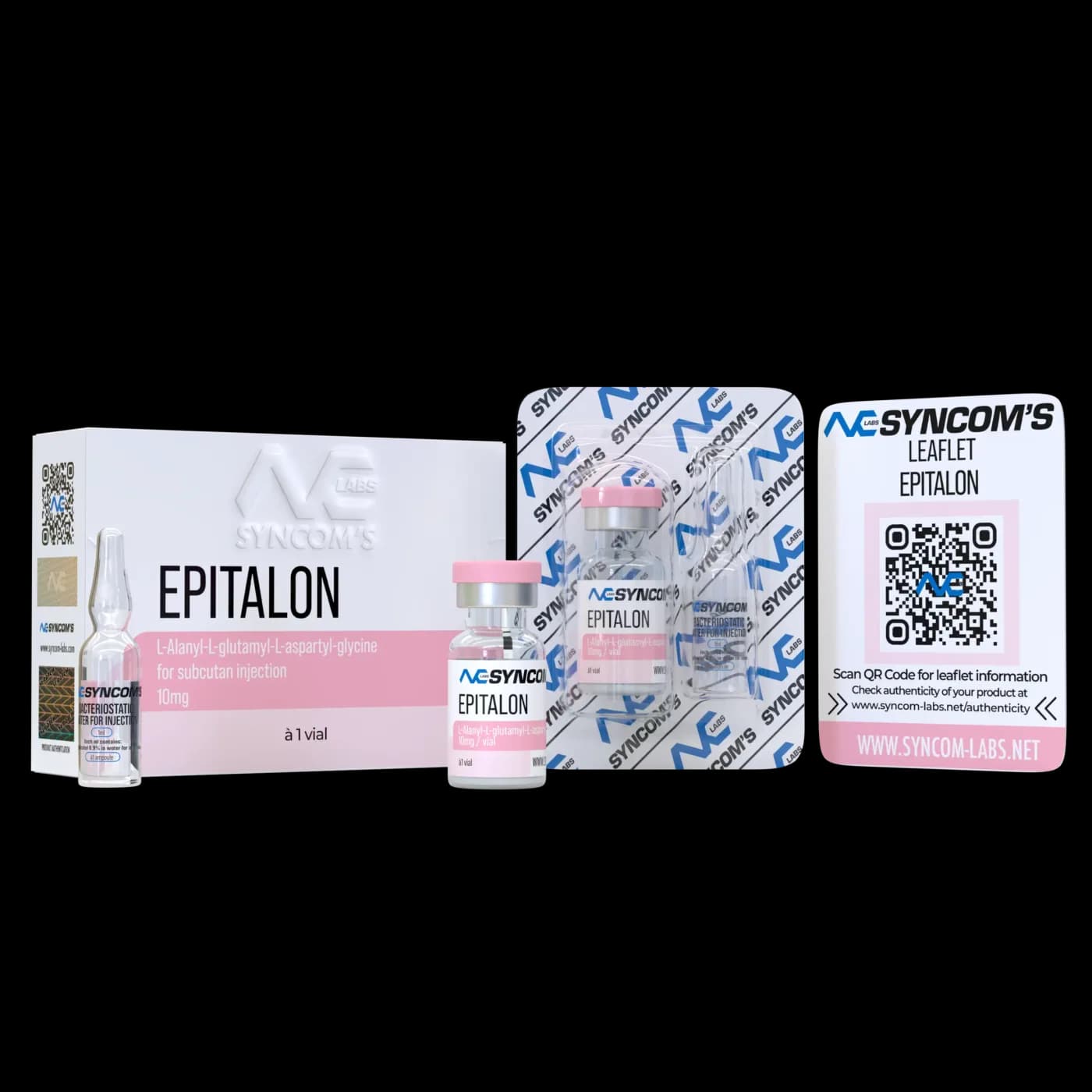
In stock
from£14.90
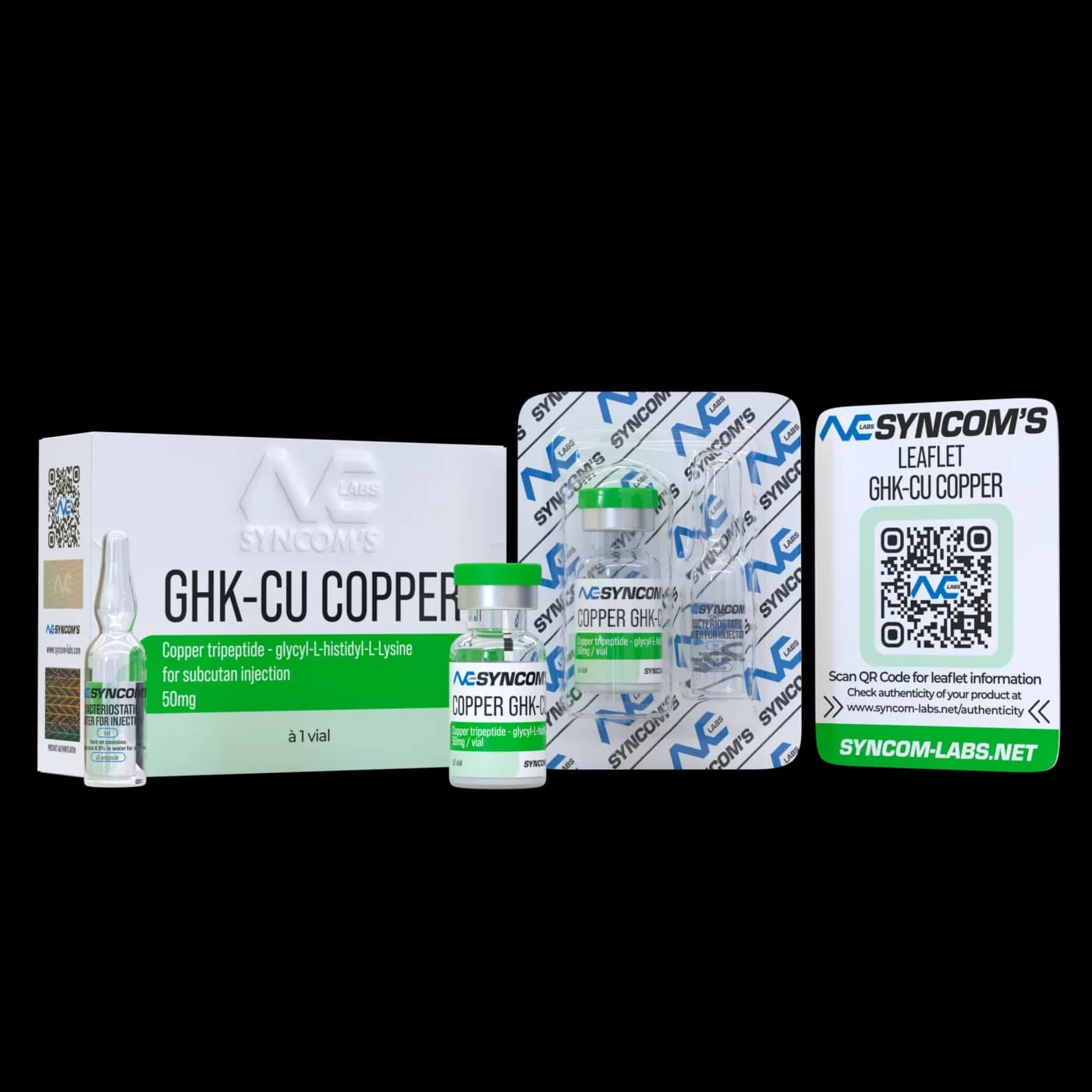
Copper Tripeptide-1 (Gly-His-Lys:Cu)
Order before 12:00 on a working day and it ships today
Figures above are the release specification. The certificate shipped with your vial carries the measured values for that specific lot. Email [email protected] with an order number for the raw chromatogram.
GHK-Cu is the copper-bound form of the glycyl-L-histidyl-L-lysine tripeptide. The peptide alone is a small, neutral molecule, but once a copper(II) ion slots into the coordination site formed by the histidine imidazole, the alpha-amino group of glycine and the deprotonated peptide nitrogen, the whole complex turns a distinctive deep blue. That colour is one of the easiest visual cues that you are looking at intact GHK-Cu rather than the uncomplexed peptide or a degraded batch.
Loren Pickart isolated GHK from human serum in 1973 while investigating why old liver tissue behaved more like young liver tissue when exposed to plasma from younger donors. The copper-binding behaviour came later, and turned a curious albumin-fraction tripeptide into one of the most studied small peptides in dermal and wound-repair literature. If you have read papers on decorin upregulation, copper-dependent lysyl oxidase activity or fibroblast collagen output, the GHK-Cu complex has almost certainly come up.
Counterfeit copper peptide is a known problem. A grey or off-white powder that turns only faintly blue on reconstitution usually means the copper loading is incomplete or the peptide has partly oxidised. Every batch we list runs through HPLC for purity and mass spectrometry for identity confirmation at an independent UK lab before it goes on the shelf. The CoA is available on request, and if a vial you receive fails an independent test you commission, we refund it. No grey-market argument, no restocking trick.
Our GHK-Cu is synthesised inside the UK and EU. We do not buy unverified Chinese bulk and relabel it, which is the route most of the cheaper listings online take. Around nine in ten UK orders leave us and land with the buyer in under forty-eight hours, tracked. If you need ten vials or more for a longer protocol or a multi-site comparison, the support team can quote a bulk price that is not on the public listing, and a real human on UK hours will answer the live chat while you sort it out.
Sold strictly for in vitro laboratory research. Not for human or veterinary use. UK 18+.
Yes. GHK-Cu is not scheduled under the Misuse of Drugs Act 1971, so buying and holding it for laboratory research is legal in the UK. It is not licensed by the MHRA for human or veterinary use, so we supply it strictly as a research-use-only reference compound, labelled not for human consumption. Selling it for personal use would breach the Human Medicines Regulations 2012.
Most UK orders are dispatched within 48 hours, with next-day options at checkout, and we ship from inside the UK so there is no customs hold. The lyophilised vial is stable at ambient temperature for the short transit window, so we send it by standard tracked post rather than cold chain. You can refrigerate or freeze the powder once it arrives.
The CoA is the batch-specific lab report for the exact vials you receive, not a generic spec sheet. It shows HPLC purity (our GHK-Cu tests above 99 percent) and a mass spectrometry result confirming the molecular weight of around 401.9 g/mol, so you know the copper tripeptide-1 is correctly assembled and copper-loaded. Request the CoA for your batch number and we will send the PDF.
GHK-Cu is copper tripeptide-1, the sequence glycyl-L-histidyl-L-lysine bound to a copper(II) ion. It was isolated from human plasma by Loren Pickart in 1973 and is one of the more heavily studied copper-binding peptides. Published in-vitro and animal research has looked at its role in tissue remodelling, collagen and extracellular-matrix signalling, and wound-healing pathways. We supply it for that laboratory work only.
For a 50mg vial, researchers typically add about 2ml of bacteriostatic water down the side of the glass and swirl gently rather than shaking. A faint blue-green colour as it dissolves is the copper complex and is expected. Store the sealed lyophilised powder at -20C for long-term holding, and keep any reconstituted solution at 2-8C away from light, avoiding freeze-thaw cycles.
Each batch is UK and EU sourced and independently tested above 99 percent purity by HPLC, with mass spectrometry confirming identity. The deep-blue colour of the lyophilised cake is a quick visual tell that the copper is properly coordinated to the peptide. For bulk or multi-vial research quantities, contact us before ordering and we can quote on volume.
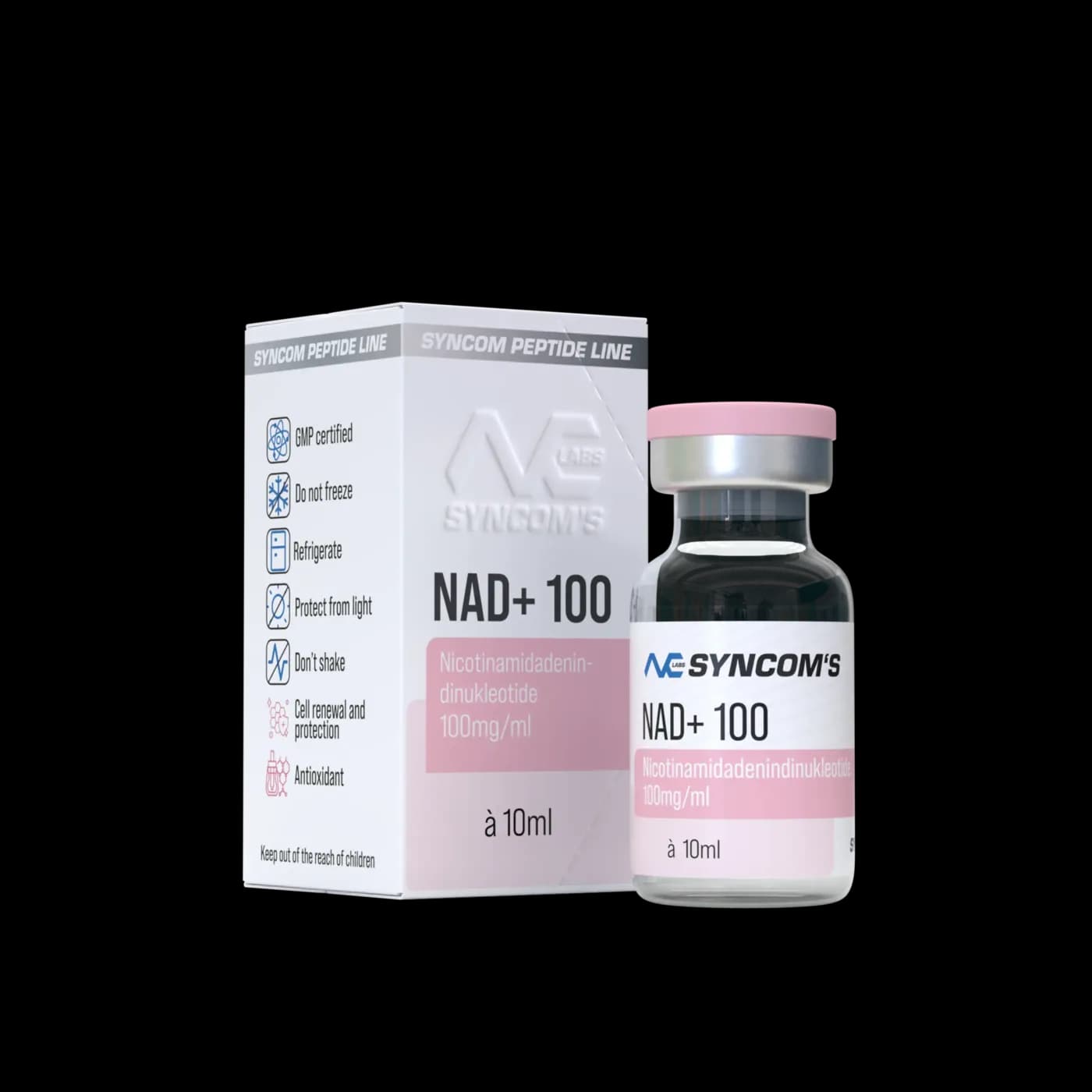
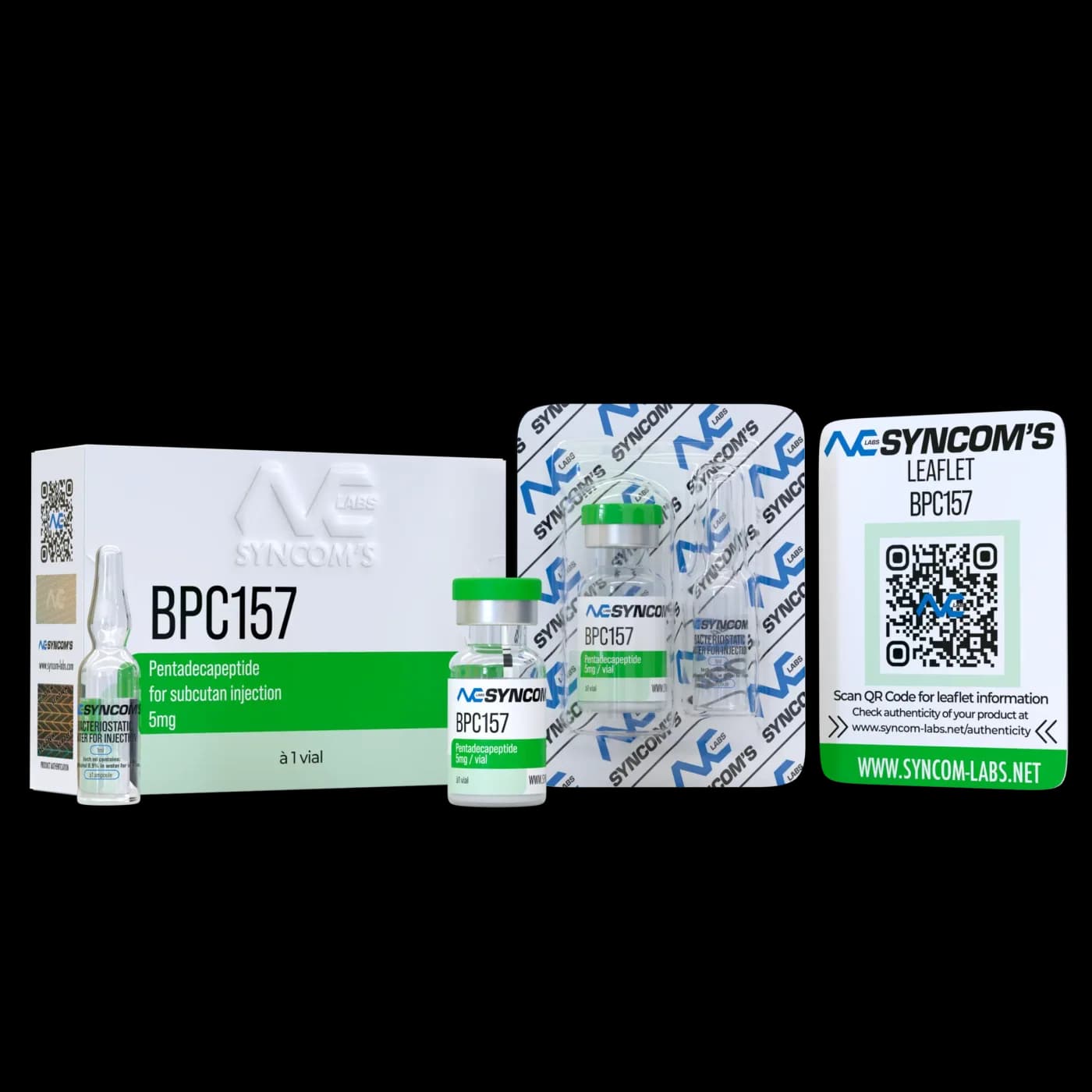
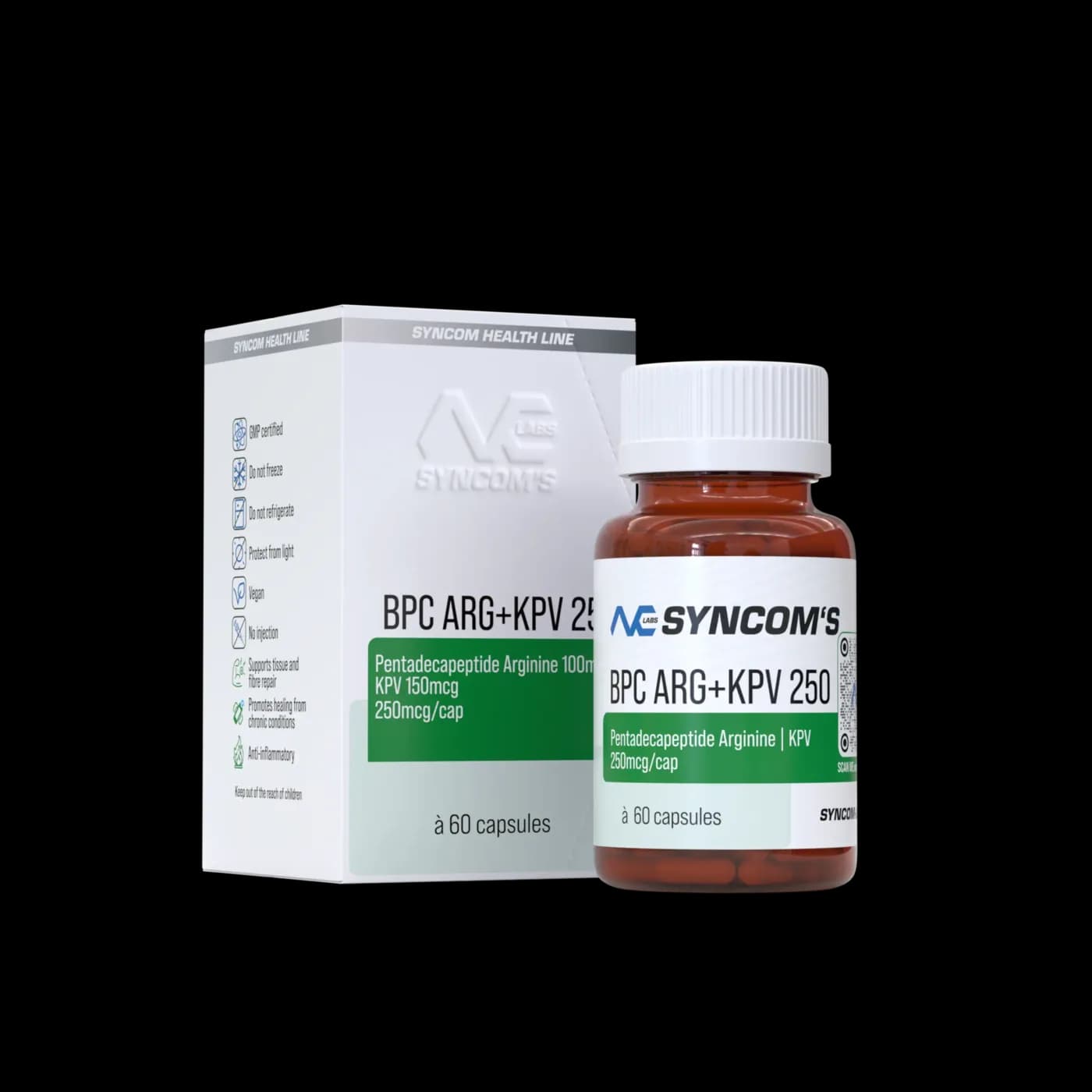
Oral capsule blend of BPC-157 and KPV studied for gut-barrier and anti-inflammatory research. For laboratory research use only.