In stock
Growth Hormone Peptides
CJC-1295 DAC
Long-Acting GHRH Analogue
>98% HPLCVial (Lyophilised)CAS 446262-90-4
incl. VAT£44.90
short-acting GHRH
Order before 12:00 on a working day and it ships today
Figures above are the release specification. The certificate shipped with your vial carries the measured values for that specific lot. Email [email protected] with an order number for the raw chromatogram.
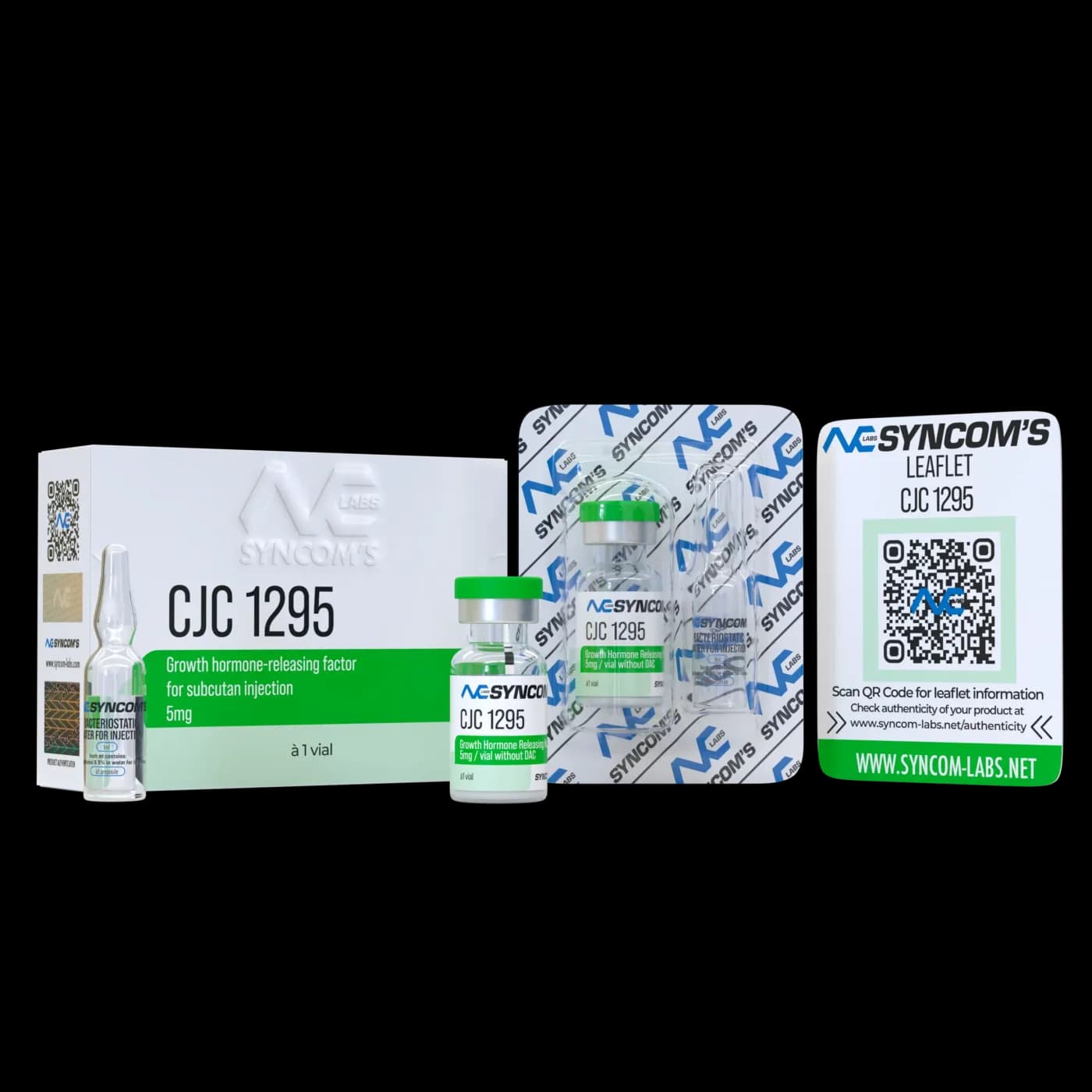
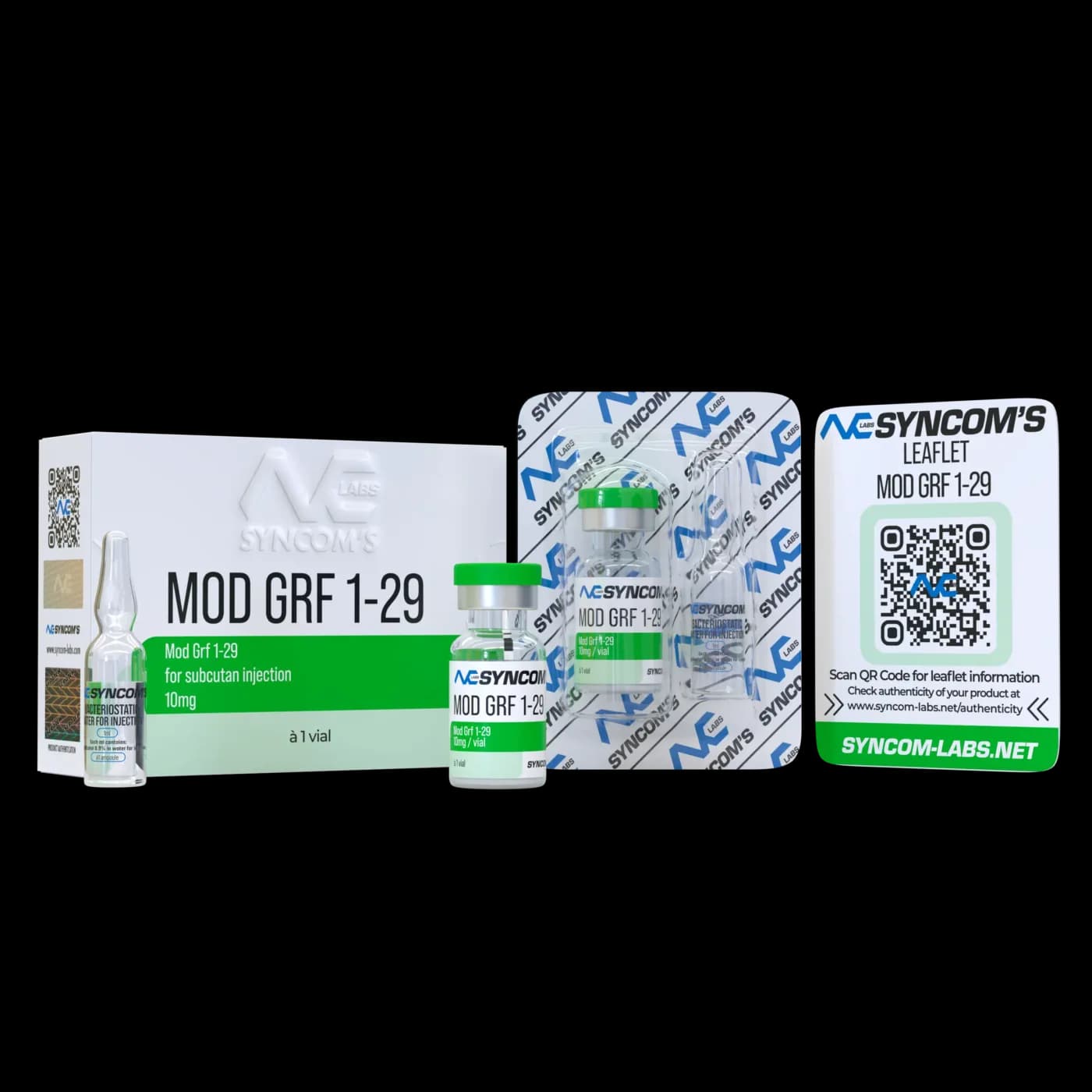
Before ConjuChem bolted a maleimide linker onto the C-terminus and turned this peptide into a multi-day GHRH analogue, the underlying 30-residue molecule already had a name: Modified GRF 1-29, or Mod GRF 1-29 for short. That is the peptide on this page. Same four Sermorelin-stabilising residue swaps, same GHRH backbone, no DAC arm. The trade name CJC-1295 no-DAC stuck after the DAC variant entered clinical work, but the unlinked sequence predates it and remains the more widely cited tool compound in GH-axis assays.
Native GHRH(1-29) falls apart in plasma within minutes. DPP-IV cleaves at position 2, while general endopeptidases chew through the backbone soon after. The substitutions D-Ala at position 2, Gln at 8, Ala at 15 and Leu at 27 close those gaps without touching the receptor-binding face. Result is a peptide that survives long enough in serum to act on the pituitary GHRH receptor and then clears, working half-life around thirty minutes by most published estimates. No linker, no albumin hitch, no carrier protein involvement.
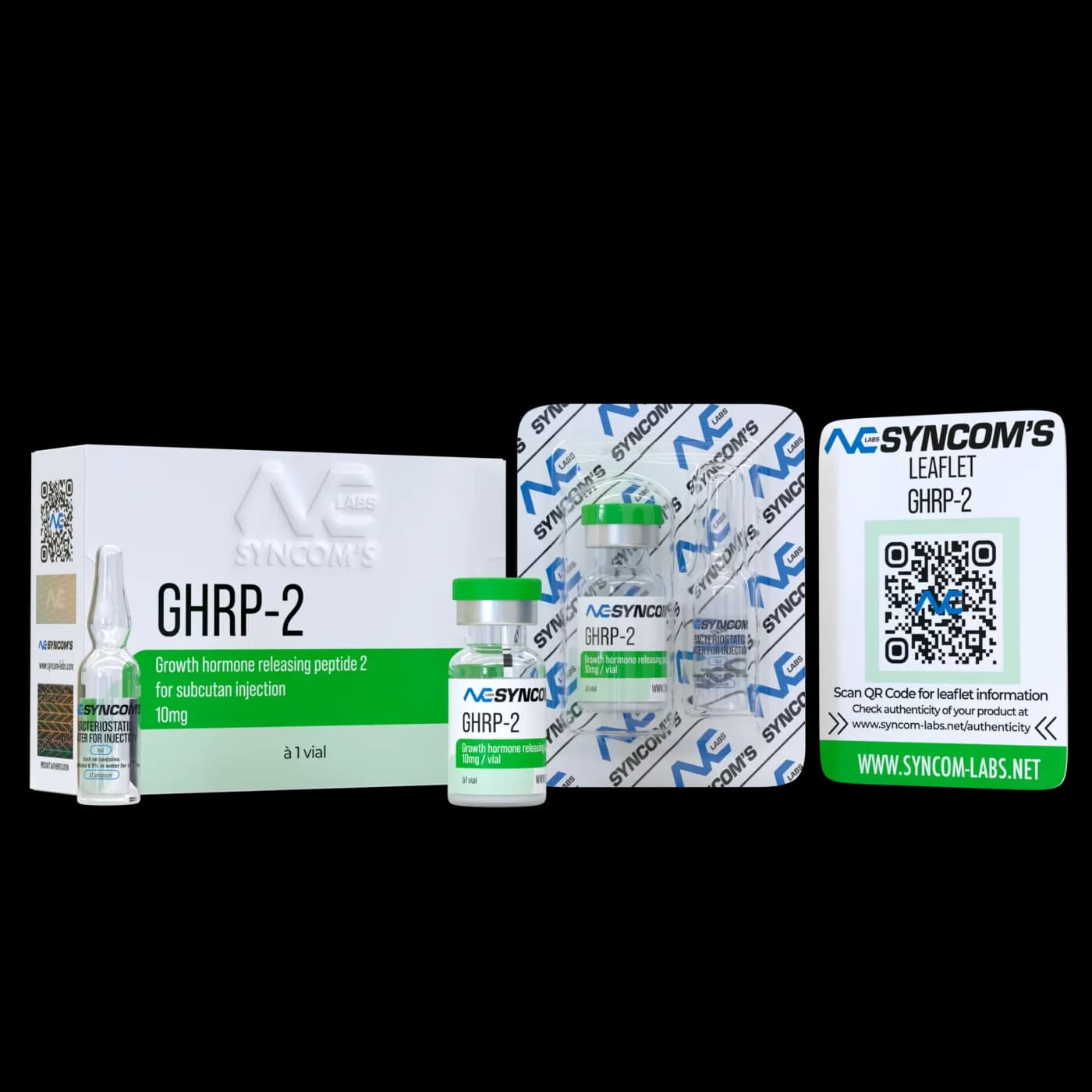
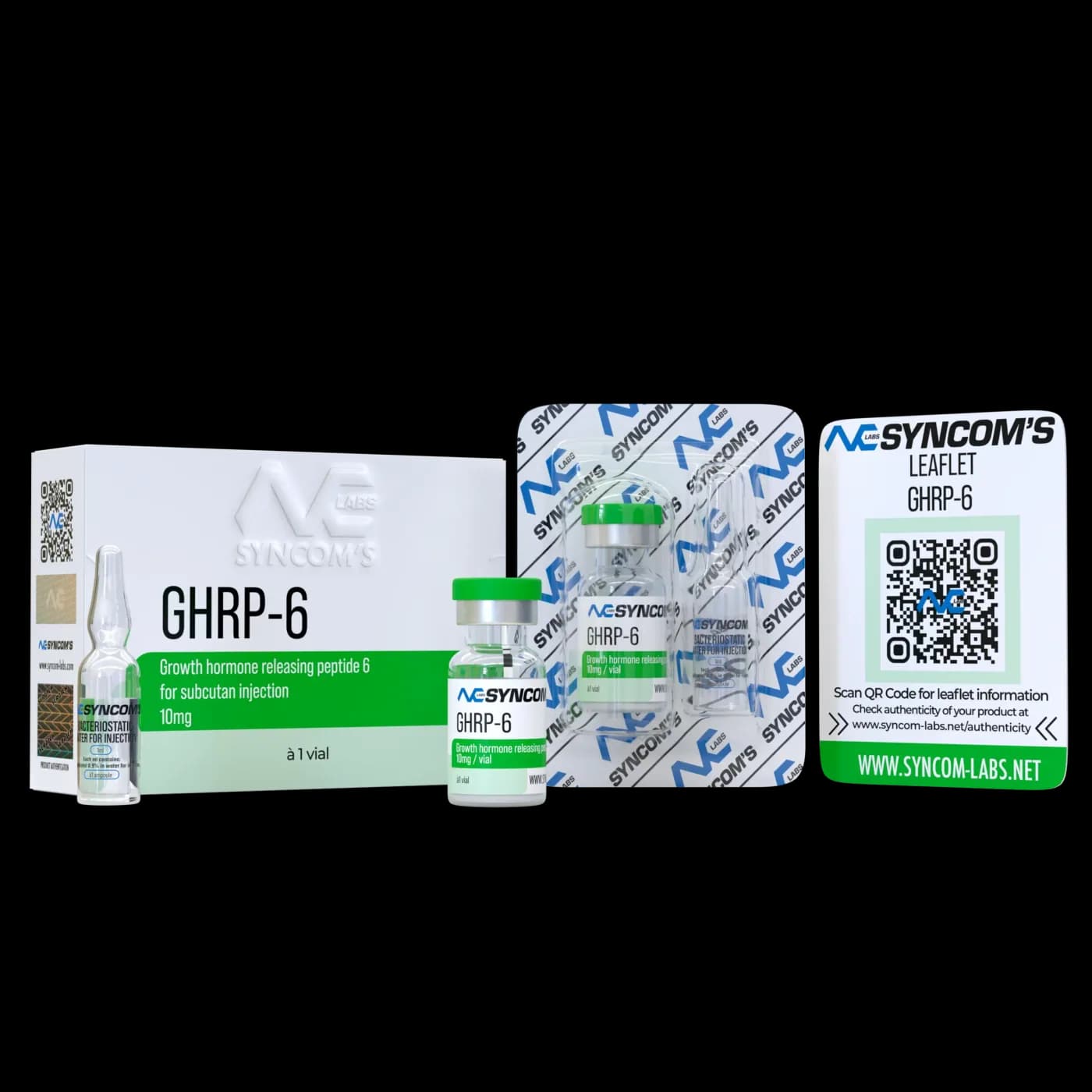
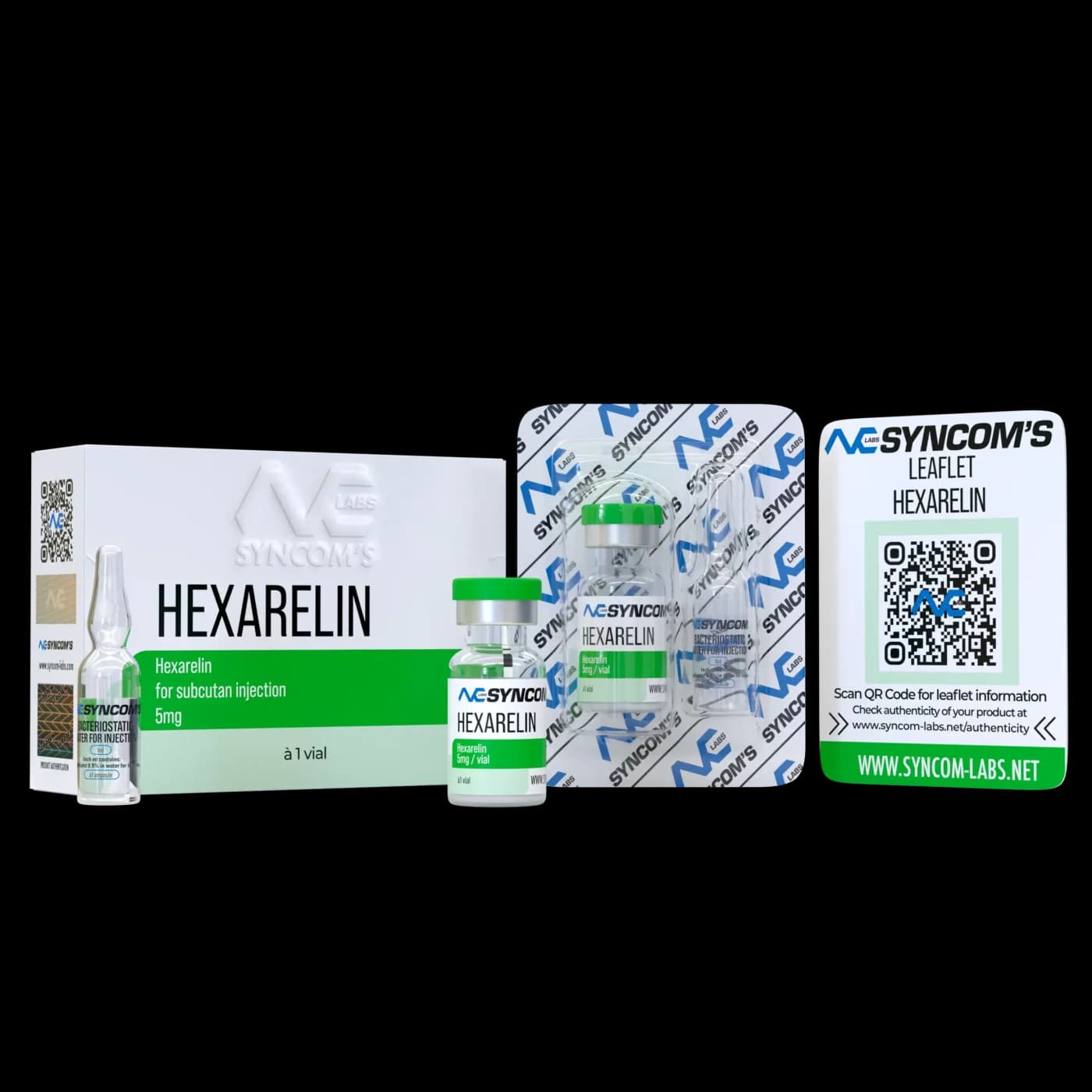
The DAC version was engineered for sustained GH and IGF-1 elevation. This one was kept short on purpose. Endogenous GHRH fires in tight bursts every few hours, and pituitary somatotrophs respond differently to a square-wave hormone signal than to a brief spike. Mod GRF 1-29 reproduces something close to that natural pulse shape, which is the reason it became the standard pairing partner for GHRP-2, GHRP-6, Ipamorelin and Hexarelin in synergy studies. Most of the published CJC+GHRP synergy data, including the assays where the two classes hit the pituitary simultaneously and pushed GH output well above either compound alone, used this peptide rather than the DAC variant.
Sealed vials hold at minus twenty for extended storage. Reconstitute with bacteriostatic water and the working solution stays stable refrigerated for several weeks, though potency drift starts becoming measurable after about four. Avoid the freeze-thaw cycles that wreck most short GHRH analogues. Because there is no albumin-binding chemistry to wait on, in vitro pituitary cell assays show response within minutes of dosing rather than the lag seen with DAC-bearing peptides.
Synthesis runs through UK and EU facilities operating to GMP-equivalent process controls. Each batch carries its own HPLC trace and mass spec report tied to the lot number on the vial. UK orders placed before mid-afternoon reach roughly nine in ten postcodes inside 48 hours through Royal Mail Tracked 24. Send a CoA-fail photograph through live chat and a refund or replacement clears the same shift. Live chat is staffed by humans during UK business hours, not bots reading scripts.
Volume work past ten vials is quoted through the support inbox rather than the cart, partly because lots that size get reviewed for batch consistency first and partly to keep the pricing flexible.
Sold strictly for in vitro laboratory research. Not for human or veterinary use. UK 18+.
Yes, you can buy CJC-1295 no DAC in the UK for laboratory research. It is not a controlled drug and is not scheduled under UK misuse legislation. It holds no MHRA marketing authorisation, so it is supplied strictly for in-vitro research use only and not for human or veterinary use. We ship to UK-based researchers and institutions.
Orders placed before the daily cut-off are dispatched within 48 hours from UK stock, with tracked next-day delivery once collected. The lyophilised powder is stable at ambient temperature for transit, so it ships as a sealed vial without cold packs. Keep it sealed and away from light on arrival, then refrigerate or freeze until you reconstitute it.
The CoA proves two things for your exact batch: identity and purity. Mass spectrometry verifies the molecular weight matches the 29-residue sequence, and HPLC reports purity, which sits at 99 percent or above on our batches. That tells you the vial holds the peptide on the label at the stated quantity, with related impurities quantified rather than assumed. Batch numbers are printed on the vial.
CJC-1295 no DAC and Mod GRF 1-29 are two names for the same molecule, GHRH(1-29) carrying four substitutions. There is no Drug Affinity Complex, so the working half-life is roughly 30 minutes rather than the multi-day window of the DAC version. The shorter profile is why research groups studying pulsatile GH secretion reach for this form over the albumin-bound variant.
Research on Mod GRF 1-29 has examined how GHRH-analogue signalling drives growth hormone release from the pituitary in cell and animal models. Because the four substitutions resist DPP-4 cleavage, in-vitro studies use it to probe receptor binding and downstream IGF-1 pathways. It is frequently paired with a GHRP such as ipamorelin in synergy assays. All findings cited are from published in-vitro or animal work.
The vial arrives as a lyophilised powder. Standard laboratory practice reconstitutes it with bacteriostatic or sterile water added slowly down the vial wall, then swirled rather than shaken. Reconstituted peptide is typically refrigerated at 2 to 8 C and used within about four weeks; for longer holds the dry powder keeps best frozen and away from light. Avoid repeated freeze-thaw cycles of the solution.
Long-Acting GHRH Analogue