In stock
Nootropic & Cognitive
Dreamcatcher
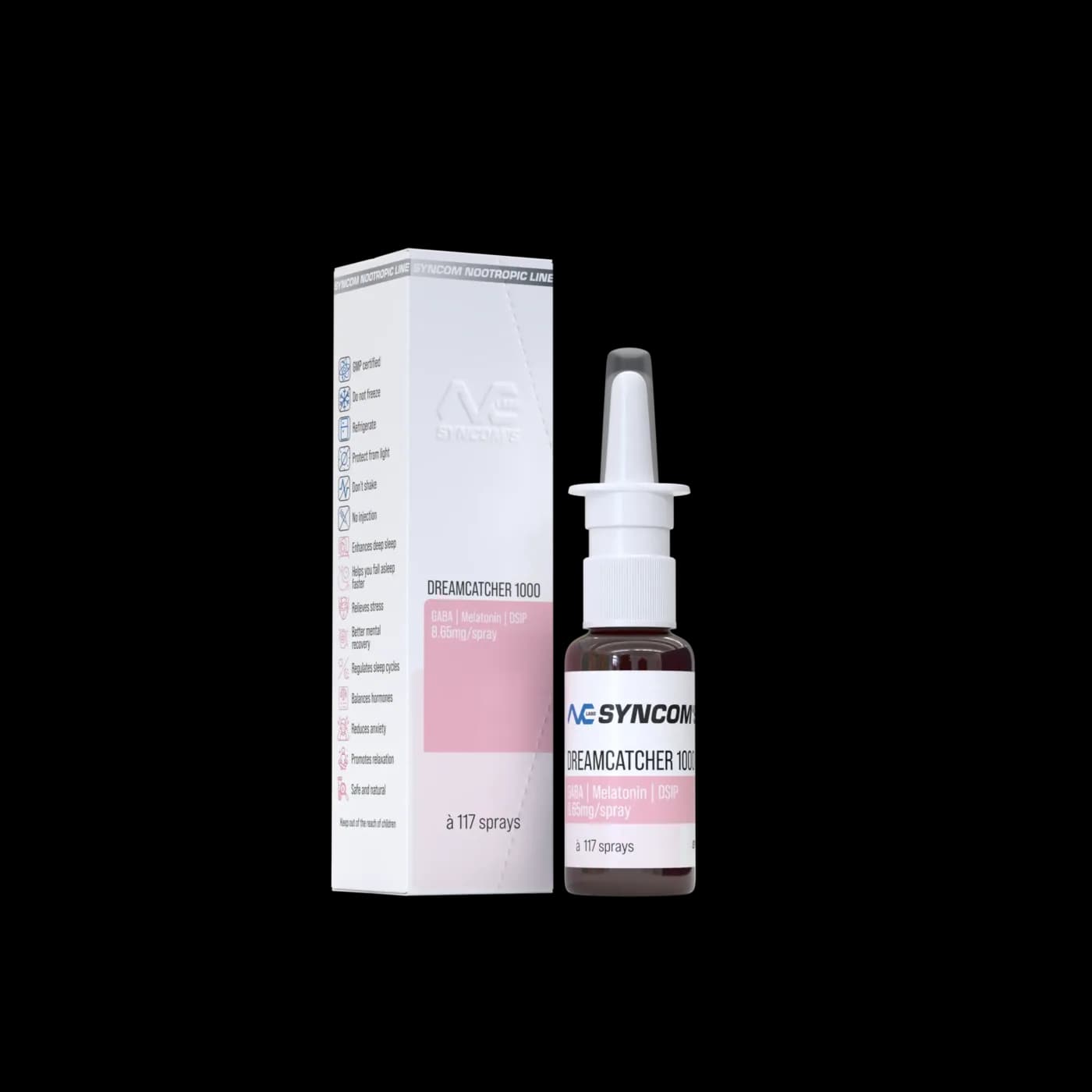
Dreamcatcher, a sleep-focused peptide blend in nasal-spray format studied for sleep-research applications. For laboratory research use only.
Vial
incl. VAT£29.90
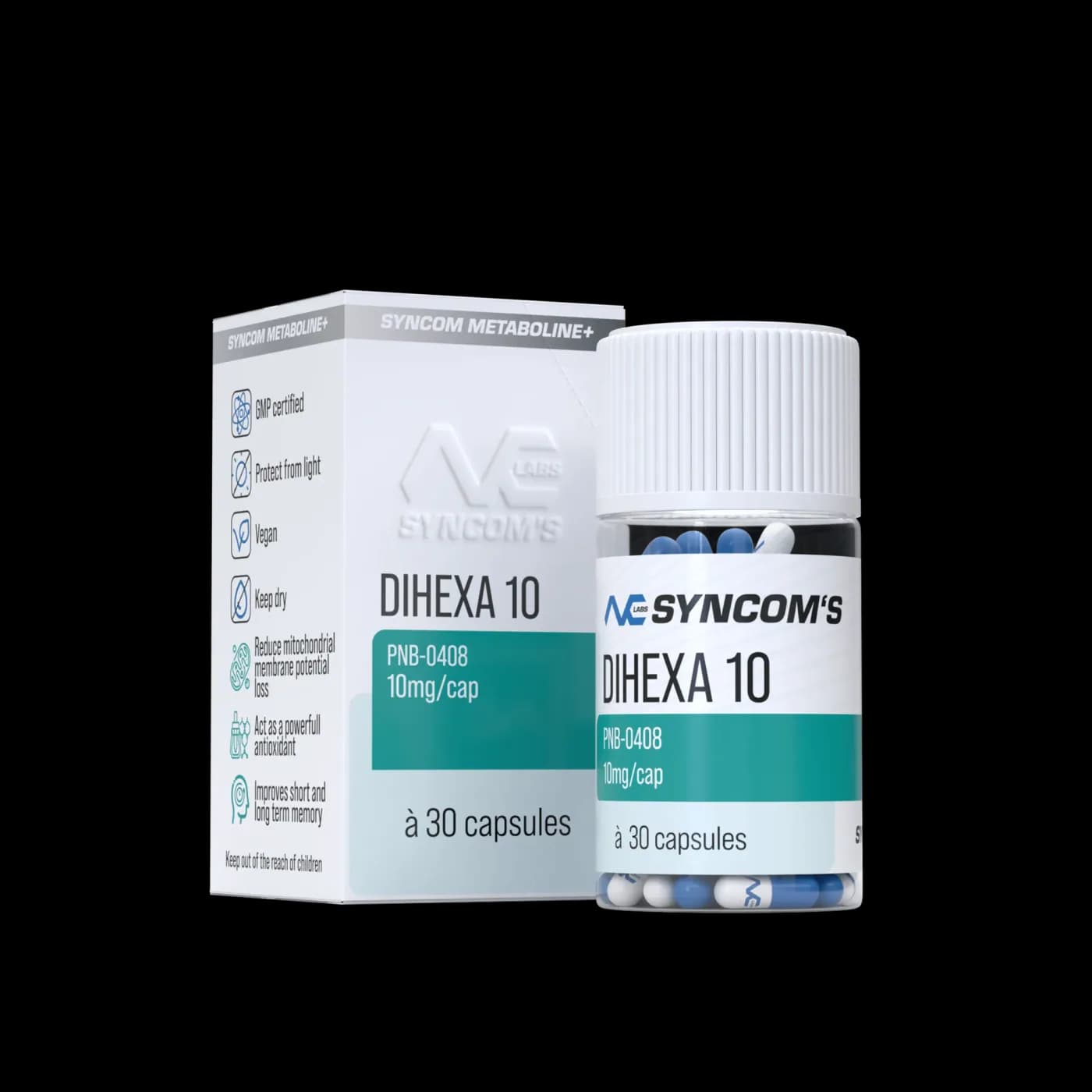
Angiotensin IV Hexamer Analogue, Lipophilic
Order before 12:00 on a working day and it ships today
Figures above are the release specification. The certificate shipped with your vial carries the measured values for that specific lot. Email [email protected] with an order number for the raw chromatogram.
Dihexa came out of Joseph Harding and John Wright’s lab at Washington State University as a deliberate piece of medicinal chemistry. They had spent years on the angiotensin IV story, working with the parent hexapeptide Val-Tyr-Ile-His-Pro-Phe and watching it light up the AT4 receptor system in hippocampal tissue. The catch was the usual one with small peptides. Ang IV barely survives a pass through plasma, let alone a trip to the brain. The team’s answer was to rebuild it as a fatty, capped two-residue molecule with a six-carbon aminohexanoic spacer, keep the Tyr-Ile head, and accept that the result would no longer look much like a peptide at all. That molecule is Dihexa, formally N-hexanoyl-Tyr-Ile-(6)-aminohexanoic amide, and it is one of the few research compounds in this catalogue that the original group reported as orally available in rodents.
Most research peptides on the shelf act through GPCRs, growth-hormone secretagogue pathways, or somatostatin-style circuits. Dihexa sits somewhere else. The Wright-Harding work, picked up later by Benoist and Kawas, points at hepatocyte growth factor and its receptor c-Met as the relevant signalling axis in the central nervous system. The proposed reading is that Dihexa augments HGF binding at c-Met rather than acting at the receptor directly, with downstream effects on dendritic arborisation and synaptogenesis in hippocampal cultures. That is a mechanism story you do not see elsewhere in the catalogue, which is part of why comparative neuroscience groups ask for it specifically.
The published work clusters in three places. The first is the original synaptogenesis line, where dissociated hippocampal neurons show measurable increases in spine density after exposure. The second is rodent cognition, with scopolamine and aged-rat models used to look at task performance after oral or intracerebroventricular administration. The third is the structure-activity tail, where the Pullman group and others have asked which parts of the N-hexanoyl cap and the aminohexanoic spacer are doing the lifting, and whether further analogues can keep the HGF augmentation while losing the lipophilicity. Anyone running comparative work on c-Met modulators or BDNF-adjacent pathways usually wants Dihexa as a reference point.
Purity on our lots runs at 98 percent or better by reverse-phase HPLC, with mass spec confirming the expected mass for the N-hexanoyl-Tyr-Ile-(6)-aminohexanoic amide structure. If a vial does not match its CoA on arrival, we refund it. The policy is real and the inbox that handles it is read by a person, not a ticket bot.
Every batch we list comes from a UK or EU contract peptide manufacturer we have audited. Dihexa is one of the compounds where sourcing matters more than usual: the molecule is heavily lipophilic and the synthesis route leaves room for residual coupling reagents if a supplier cuts corners. We do not list lots from unverified Asian sources for that reason. UK orders placed before late afternoon Monday to Thursday are dispatched the same working day, and around nine out of ten arrive within 48 hours.
Lyophilised Dihexa is stable at room temperature for short transit windows but should be moved to a freezer at minus 20 C on arrival for long-term storage. Because of the lipophilic backbone, most labs reconstitute in DMSO or ethanol rather than bacteriostatic water and dilute into assay buffer at the bench. If you need ten or more vials for a multi-arm protocol or a longer time-course study, message support for a custom quote rather than running through the cart. Live chat is staffed by humans during UK working hours, and reconstitution or CoA questions get an answer from someone who handles the stock.
Sold strictly for in vitro laboratory research. Not for human or veterinary use. UK 18+.
Yes. Dihexa is not a controlled substance under the Misuse of Drugs Act and is not a licensed medicine in the UK, so it is sold legally as a research chemical for laboratory use only. We supply it strictly for in-vitro and analytical research, not for human or veterinary use, and we do not provide it for any other purpose.
Orders placed before the daily cut-off are dispatched the same working day for UK next-day delivery via tracked courier. Lyophilised Dihexa is stable at ambient temperature for short transit, so we ship the vials or capsules without a cold chain. Each package is discreet and includes the batch documentation for that lot.
The CoA is batch-specific and reports two things that matter most for research: HPLC purity, confirming the lot tests above 98 percent, and mass-spec identity, confirming the molecule matches Dihexa at 504.67 g/mol. It ties results to the exact vial you receive rather than a generic spec sheet, so your work is traceable to a real lot.
Dihexa is a small lipophilic oligopeptide (Hexanoyl-Tyr-Ile-Ahx-NH2, CAS 1401708-83-5) designed by Joseph Harding and John Wright at Washington State University as a metabolically stable redesign of angiotensin IV. The angiotensin IV core was shortened to a hexamer and capped to resist breakdown, which is the work the catalogue subtitle refers to.
Research on Dihexa has looked at its activity at the hepatocyte growth factor (HGF) and c-Met receptor system, and at synapse formation in cultured neurons and rodent models of cognitive impairment. These are in-vitro and animal findings reported in the literature. There are no human clinical trials, and we make no therapeutic or medical claims about it.
Store the sealed lyophilised powder away from light; kept cool and dry it is stable for long-term holding. Because Dihexa is lipophilic, researchers typically reconstitute it in a non-aqueous solvent such as DMSO rather than bacteriostatic water, then aliquot to limit freeze-thaw cycles. Capsules are pre-portioned and need no reconstitution. Reconstitution is a research-handling step only.
Dreamcatcher, a sleep-focused peptide blend in nasal-spray format studied for sleep-research applications. For laboratory research use only.
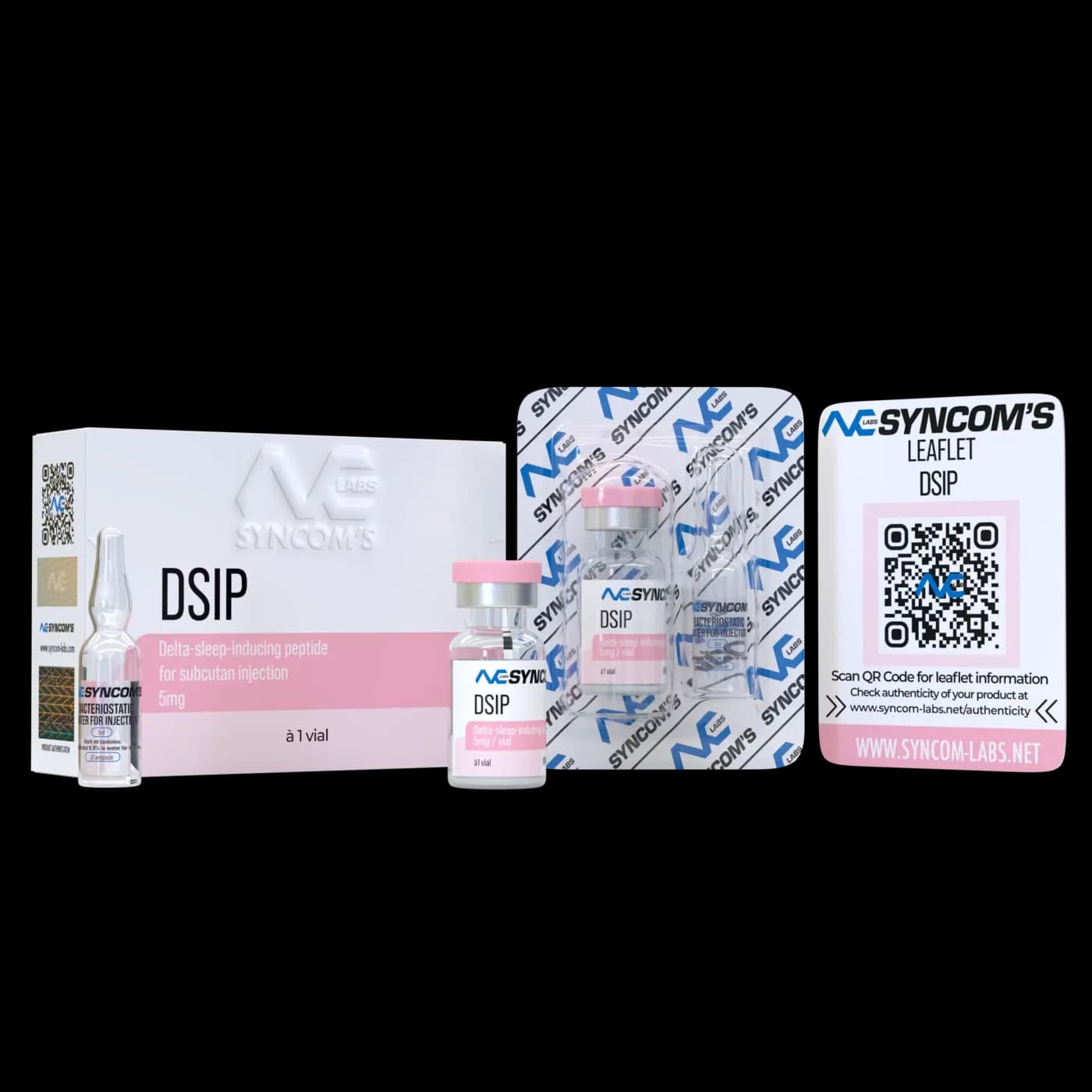
Delta Sleep-Inducing Peptide, researched for its role in sleep regulation and stress response. For laboratory research use only.