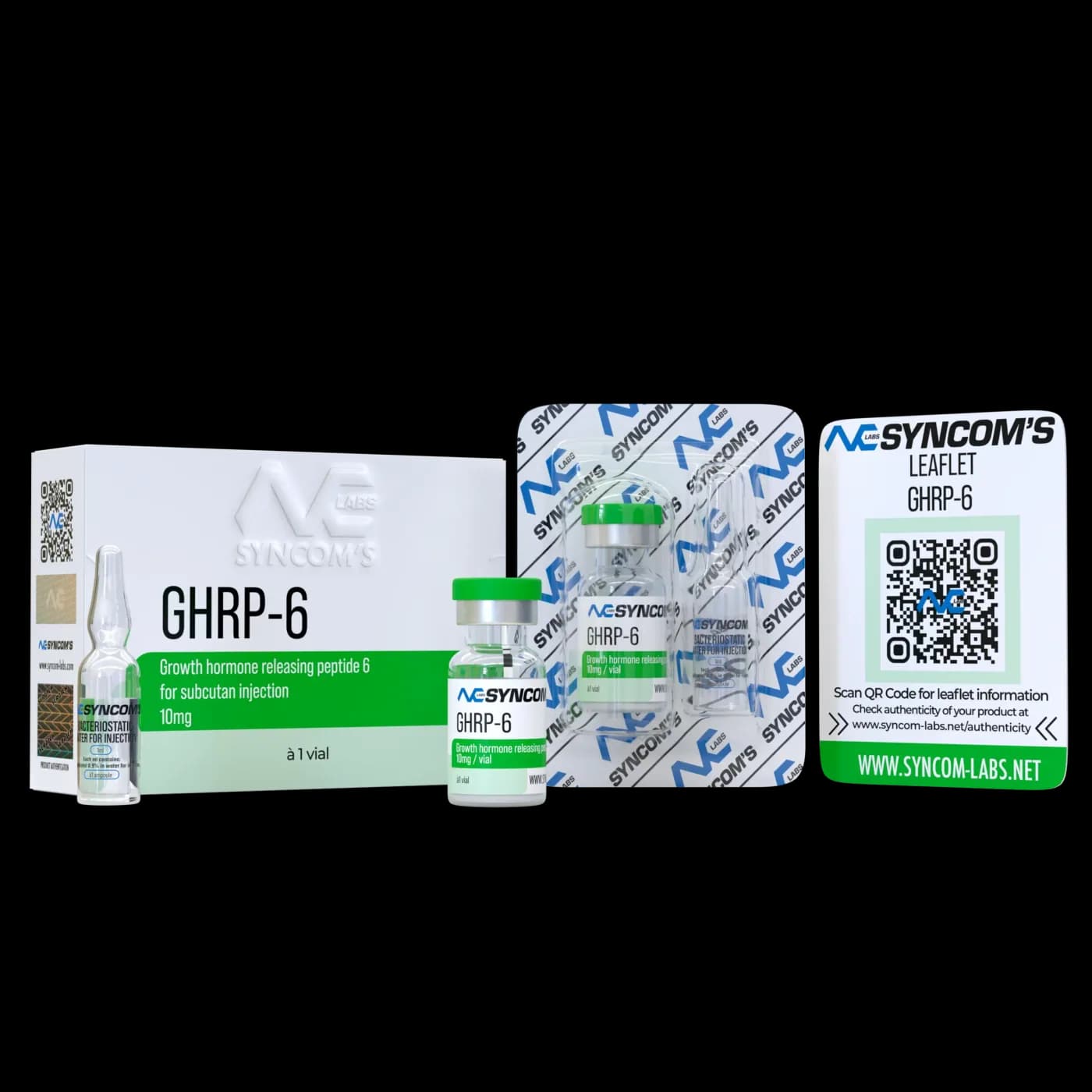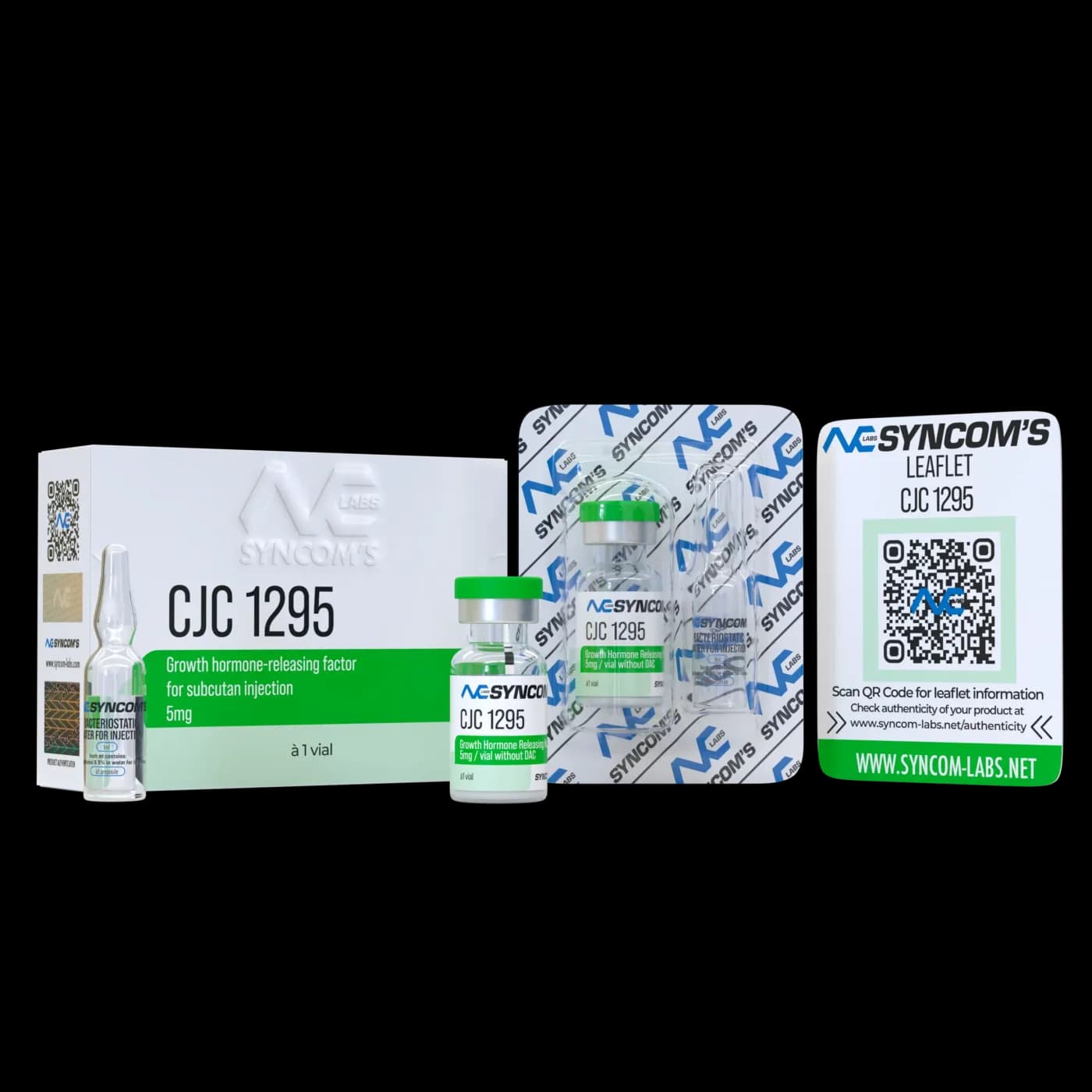
In stock
Growth Hormone Peptides
CJC-1295 DAC
Long-Acting GHRH Analogue
>98% HPLCVial (Lyophilised)CAS 446262-90-4
incl. VAT£44.90
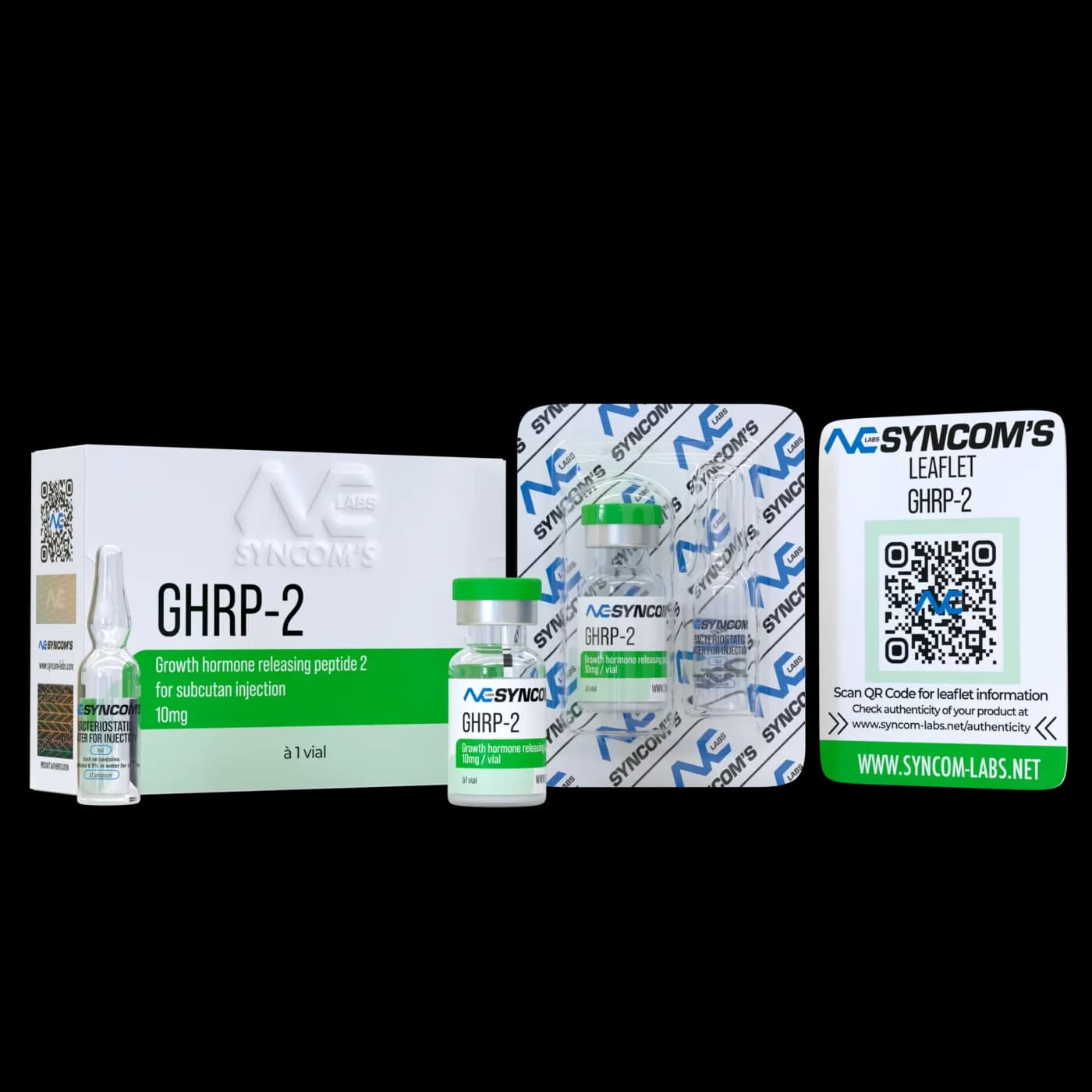
Pralmorelin
Order before 12:00 on a working day and it ships today
Figures above are the release specification. The certificate shipped with your vial carries the measured values for that specific lot. Email [email protected] with an order number for the raw chromatogram.
GHRP-2 carries the International Nonproprietary Name Pralmorelin, which is the label you will see on most pharmacological reference databases and on the original Japanese diagnostic use file. The molecule itself is a six-residue synthetic peptide, D-Ala-D-2-Nal-L-Ala-L-Trp-D-Phe-L-Lys-NH2, designed in the late 1980s out of the growth hormone releasing peptide programme that began at Tulane University and was carried forward by Wyeth-Ayerst. It binds the ghrelin receptor (GHS-R1a) on pituitary somatotrophs and on hypothalamic neurons, and that binding is the entire research story.
Three labels turn up in the literature for the same hexapeptide. Pralmorelin is the INN. GHRP-2 is the developmental code from the GHRP family. KP-102 appears in older Kaken Pharmaceutical and Wyeth papers. If you are pulling references for a protocol, all three terms will return overlapping hits, and it is worth searching each.
The most common mix-up at the order stage is GHRP-2 against GHRP-6. They share the same receptor target but they are different sequences with different downstream profiles. GHRP-6 contains a Trp-Phe pair and produces a marked appetite signal in rodent models. GHRP-2 is the trimmer molecule, generally cited as the more potent GH releaser per microgram in pituitary cell assays. Against Ipamorelin, the contrast is cleaner still. Ipamorelin is a pentapeptide with a near-flat cortisol and prolactin profile in published animal work. GHRP-2 has been reported to elevate cortisol and prolactin slightly above baseline in the same models. Neither finding makes one peptide right or wrong for a study, but the choice usually comes down to which secondary axis a lab wants to keep quiet.
Each vial contains lyophilised GHRP-2 acetate. Synthesis is sourced through UK and EU peptide manufacturers we hold long-running supply relationships with, not relabelled bulk from open marketplaces. Every batch is released against HPLC for purity and mass spectrometry for identity, and the CoA referencing the lot number on your vial is available before or after the order through live chat. If any vial fails to match its CoA on independent testing, the order is refunded in full.
Around nine in ten UK orders leave the warehouse and arrive within 48 hours. Live chat is staffed by people in UK hours who can pull batch documentation while you are on the line. For studies that need ten vials or more, contact support directly for tiered pricing rather than stacking the cart at retail.
Sold strictly for in vitro laboratory research. Not for human or veterinary use. UK 18+.
Yes. GHRP-2 (Pralmorelin) is not a controlled or scheduled substance in the UK and can be bought legally for laboratory research. It is supplied strictly for in-vitro and research use, not for human or veterinary use. Pralmorelin is approved in Japan as a diagnostic agent for growth hormone deficiency, but it holds no medicines licence here.
Around 90% of UK orders are dispatched within 48 hours, with tracked delivery. The lyophilised vial is stable at room temperature for shipping, so it travels as a dry powder without cold-chain packaging. We recommend moving it to the freezer on arrival and refrigerating only after reconstitution. Stock is UK and EU sourced.
The batch CoA confirms identity and purity for the specific lot you receive. Mass spectrometry verifies the molecular weight matches GHRP-2 at roughly 818 g/mol, confirming it is the correct hexapeptide and not a mislabelled compound. HPLC reports purity above 98%, showing how little related peptide or process residue is present. Both are run per batch, not once.
GHRP-2 is a synthetic hexapeptide first developed from Cyril Bowers' growth-hormone-releasing peptide work in the late 1980s. Published in-vitro and animal research has studied it as a ghrelin mimetic that binds the GHS-R1a receptor on pituitary somatotrophs, where it has been observed to trigger pulses of growth hormone release. Some studies also look at its effect on appetite signalling.
The sequence is D-Ala-D-2-Nal-Ala-Trp-D-Phe-Lys-NH2, with three D-amino acids and a C-terminal amide that make it more resistant to enzymatic breakdown than a natural peptide. It ships as a white lyophilised (freeze-dried) powder in a sealed 10mg vial. Molecular formula is C45H55N9O6 and the plasma half-life reported in research is under 60 minutes.
Researchers typically reconstitute the powder with bacteriostatic or sterile water added slowly down the vial wall, then swirl gently rather than shaking to avoid foaming the peptide. Sealed, the dry vial keeps best frozen and away from light. Once in solution it is generally held at 2-8C and used within a few weeks. Storage handling is a research procedure, not a usage instruction.
Long-Acting GHRH Analogue
short-acting GHRH