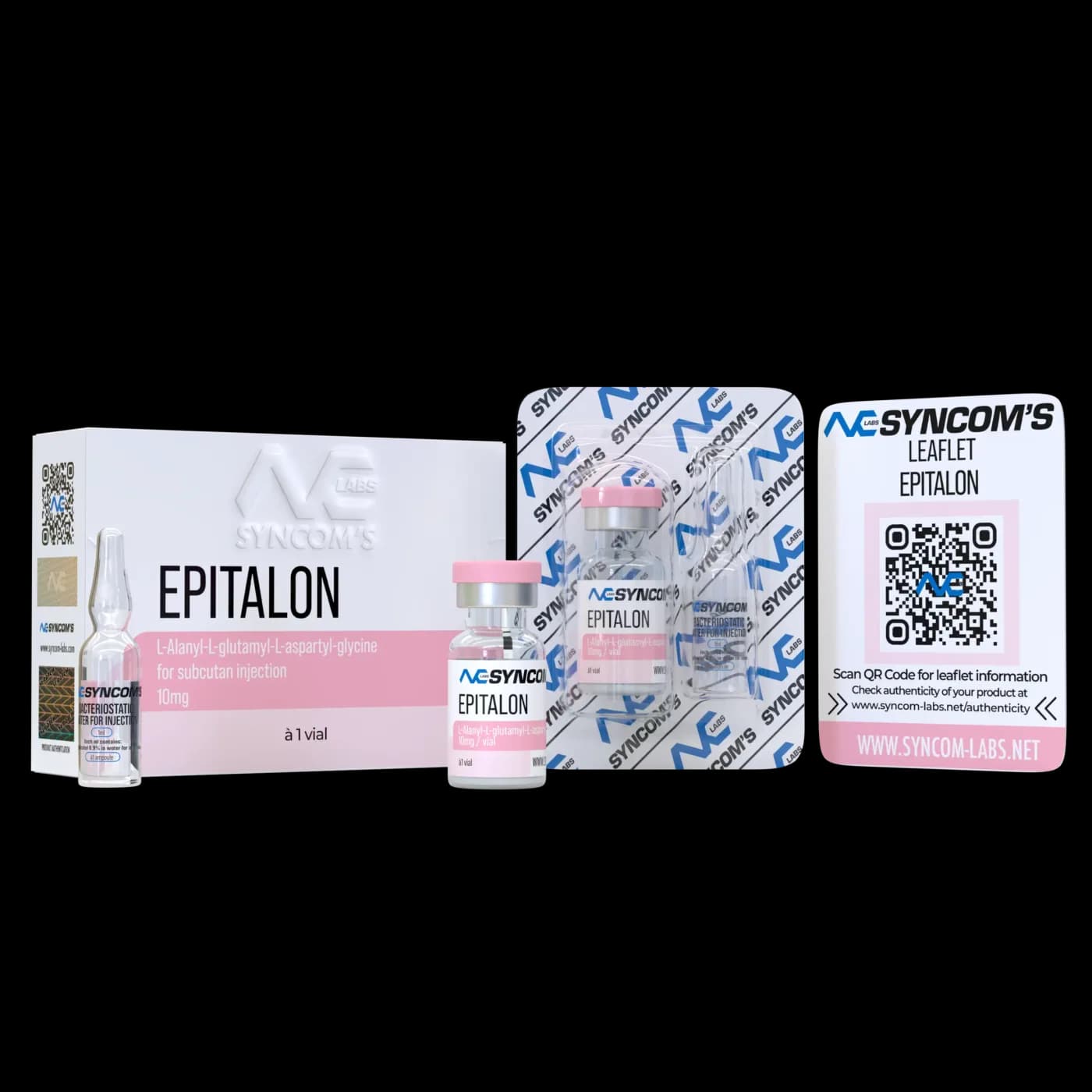
In stock
from£14.90
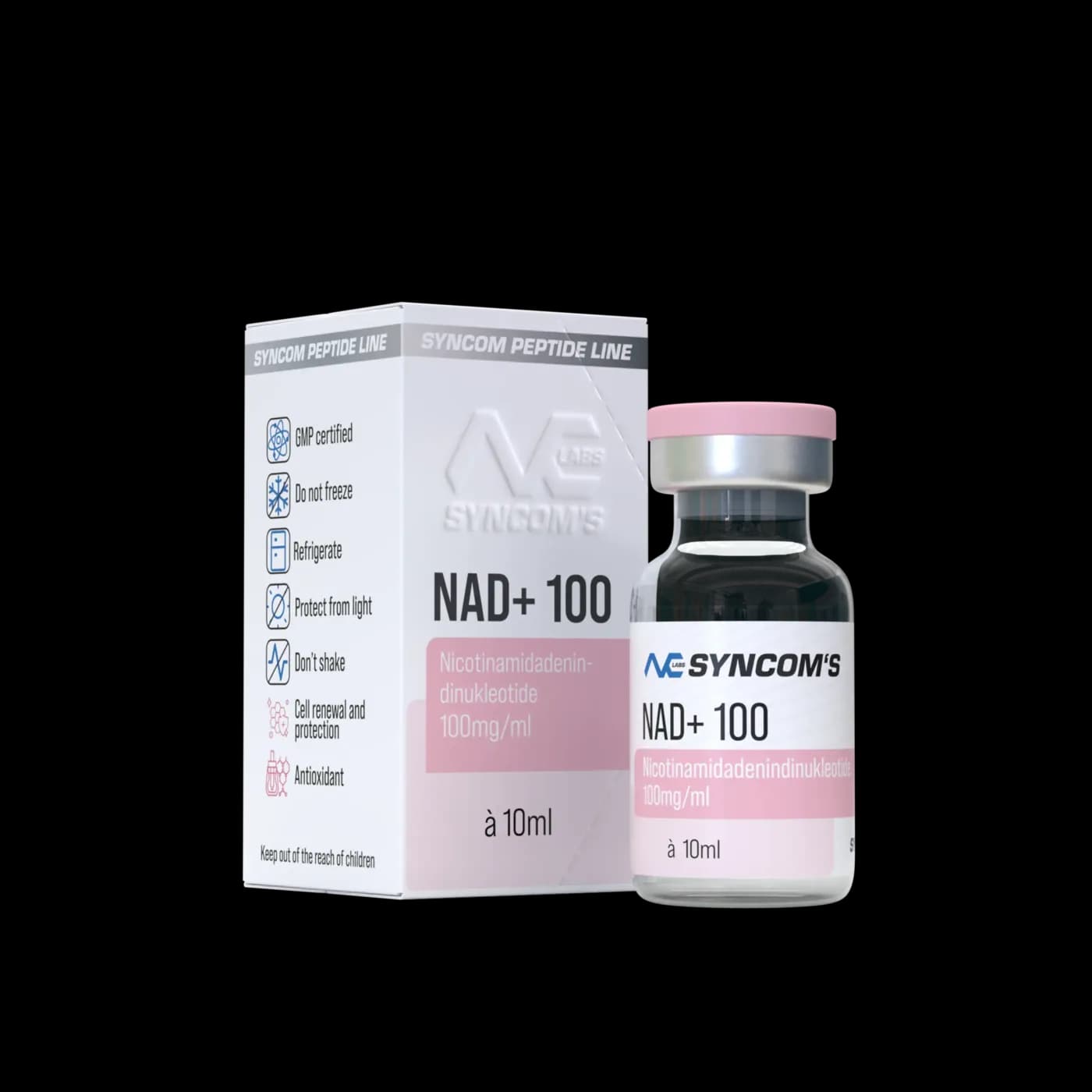
Nicotinamide Adenine Dinucleotide
Order before 12:00 on a working day and it ships today
Figures above are the release specification. The certificate shipped with your vial carries the measured values for that specific lot. Email [email protected] with an order number for the raw chromatogram.
NAD+ is the oxidised form of nicotinamide adenine dinucleotide, a dinucleotide cofactor present in every living cell. It is built from a nicotinamide ring linked through two ribose sugars and a pyrophosphate bridge to an adenine. Molecular formula C21H27N7O14P2, molecular weight about 663.4 g/mol. Worth saying upfront because catalogues like to mix everything together: this is a coenzyme, not a peptide. There is no amino acid sequence and no SPPS process. It is purified as a sodium salt and lyophilised into a fine off-white powder.
NAD+ was first identified by Arthur Harden and William Young in 1906 while they were trying to figure out what was actually doing the work in yeast fermentation extracts. More than a century later it remains one of the most studied molecules in biochemistry, because almost every redox reaction in the cell routes electrons through the NAD+ / NADH pair. The ratio of those two forms is itself a readout of metabolic state, which is why labs working on mitochondrial function, glycolysis, and oxidative phosphorylation keep coming back to it.
The NAD+ we list is supplied by a UK or EU manufacturer we have audited. We deliberately avoid unverified Chinese material on this one because NAD+ degrades into nicotinamide and ADP-ribose if it is handled badly during synthesis or shipping, and a freshly synthesised vial that looks fine on paper can actually be 70 percent intact NAD+ by the time it reaches your bench. The lots we ship test at 98 percent purity or higher by reverse-phase HPLC, with mass spectrometry confirming the 663 Da parent ion. The Certificate of Analysis you receive matches the lot number on the vial label. If the material does not match the CoA, we refund it.
NAD+ is hygroscopic and light-sensitive. Stored sealed at minus 20 C and kept away from moisture it is good for two years or more. Once reconstituted in water or buffer, aliquot it, freeze what you do not need that day, and avoid repeated freeze-thaw. Working solutions held at neutral pH and 4 C drift downward in concentration within hours, faster at higher pH, so pH 5 to 7 is the friendly window for assay buffers.
UK orders placed Monday to Thursday go out the same working day in light-protected, temperature-stable packaging. Around 90 percent arrive within 48 hours. If you need ten or more vials, or larger gram quantities for a cascade or screening project, message support and we will quote a price rather than ask you to stack the cart. Live chat during UK hours is staffed by actual people, not a bot, and the same team handles CoA questions and reconstitution queries.
Sold strictly for in vitro laboratory research. Not for human or veterinary use. UK 18+.
Yes. NAD+ is legal to buy and hold in the UK when it is sold and used strictly as a research chemical, which is how we supply it. It is not a controlled substance. What it is not approved for is human or animal use, so every vial ships labelled for in-vitro and laboratory research only. Keep it stored and logged as lab material.
Around 90% of UK orders leave our facility within 48 hours, most on a tracked next-day service once dispatched. NAD+ ships as a lyophilised (freeze-dried) solid in a sealed glass vial, which is stable at ambient temperature for the few days it spends in transit. You move it to a freezer on arrival. We dispatch from within the UK, so there are no customs delays or import charges.
The CoA is batch-specific and confirms two things: identity and purity. HPLC reports purity for the exact lot you receive (our NAD+ runs greater than 98%), and mass spectrometry confirms the molecule is nicotinamide adenine dinucleotide at 663.43 g/mol, not a mislabelled substitute. It is not a marketing number copied between batches. Match the lot code on your vial to the CoA.
NAD+ is not a peptide. It is a dinucleotide coenzyme (CAS 53-84-9, formula C21H27N7O14P2) built from two nucleotides, so catalogues that file it under peptides are filing it wrong. NMN and NR are smaller precursor molecules that cells convert into NAD+. Research uses them differently: NAD+ is the active coenzyme itself, while NMN and NR are studied as ways to raise NAD+ indirectly.
Store the sealed lyophilised vial at -20C. Reconstitute with bacteriostatic or sterile water, then keep the solution at 2-8C and protect it from light. NAD+ is less stable in solution than most peptides and its reconstituted form sits near pH 3.5, so use it within a couple of weeks rather than pushing a long window, and never refreeze a reconstituted vial. Freeze-thaw cycles degrade it.
NAD+ is one of the most studied molecules in cell biology, first identified by Harden and Young in 1906. In-vitro and animal research has examined its role as a redox carrier in energy metabolism and as a substrate that sirtuins (SIRT1) and PARP1 compete for during DNA repair. Work from Harvard and MIT groups has looked at how falling NAD+ tracks with markers of cellular ageing.
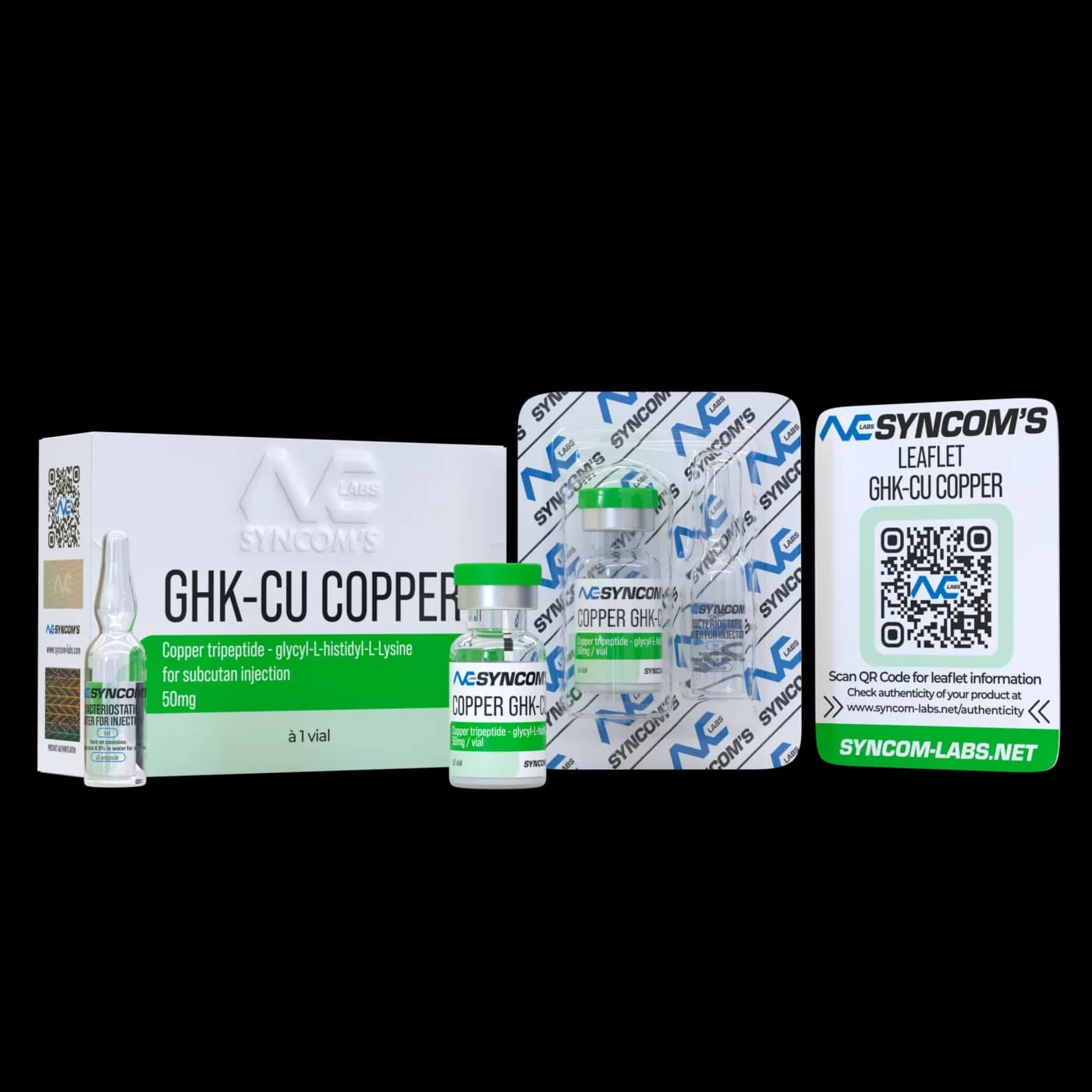
Copper Tripeptide-1 (Gly-His-Lys:Cu)
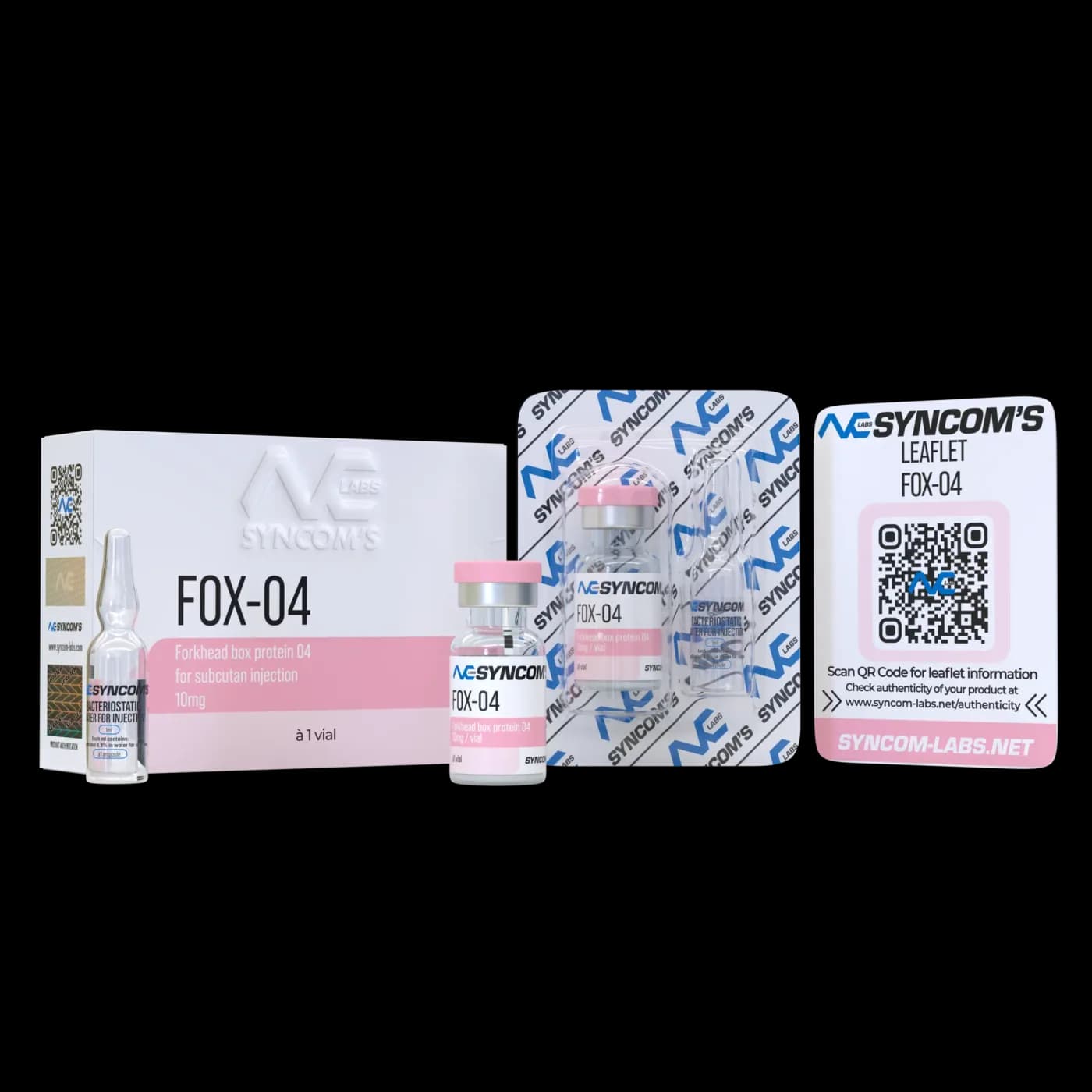
FOXO4-DRI, a senolytic peptide studied for selective clearance of senescent cells in ageing research. For laboratory research use only.
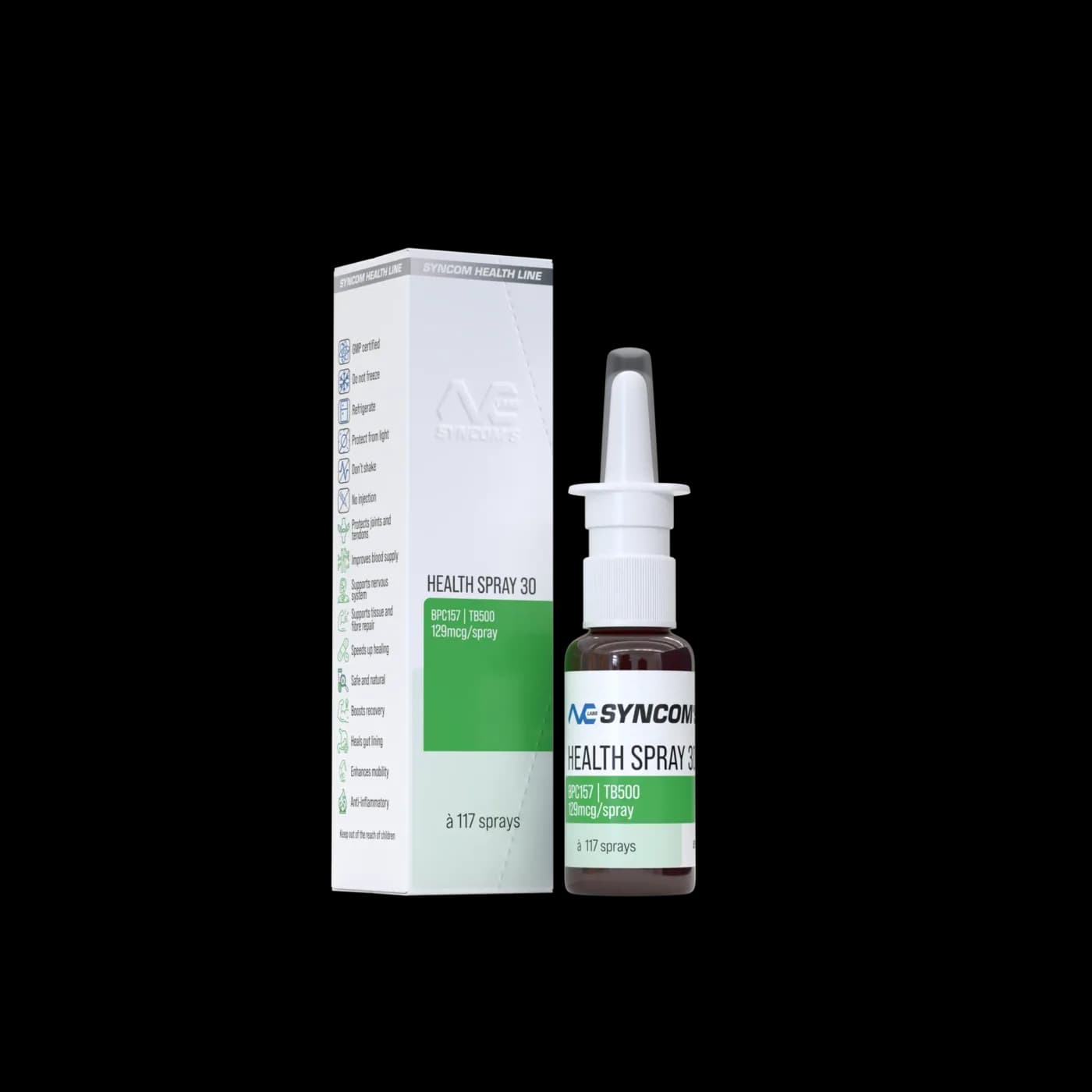
Health Spray, a wellness peptide blend in nasal-spray format studied in general research applications. For laboratory research use only.