In stock
from£34.90
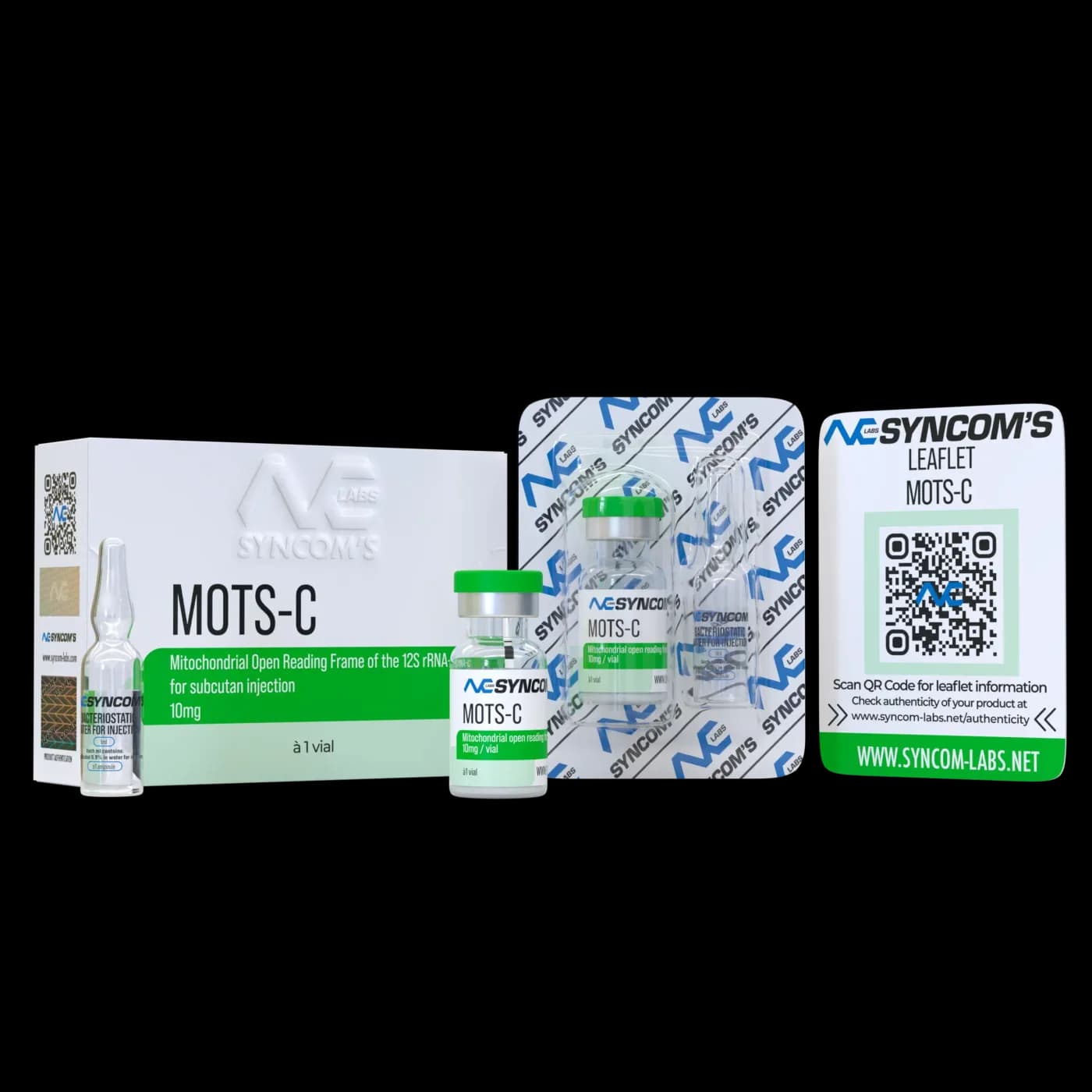
Mitochondrial-Derived Peptide
Order before 12:00 on a working day and it ships today
Figures above are the release specification. The certificate shipped with your vial carries the measured values for that specific lot. Email [email protected] with an order number for the raw chromatogram.
Most of the peptides on this site come from genes that live in the cell nucleus. MOTS-c is different. Its 16-residue sequence (MRWQEMGYIFYPRKLR) is read off a small open reading frame tucked inside the 12S rRNA region of mitochondrial DNA. Pinchas Cohen and Changhan Lee’s group at USC reported it in 2015, and it sat at the front of a still-young field now called mitochondrial-derived peptides, or MDPs.
That origin matters for how researchers think about it. A peptide written into mtDNA is, in effect, a signal the mitochondrion is allowed to send on its own behalf, without waiting on the nuclear genome. Published preclinical work has put MOTS-c into AMPK activation assays, glucose-handling models, and exercise-mimetic protocols in rodents and cultured myocytes.
If you scan PubMed for MOTS-c, three threads dominate. The first is energy sensing: papers track AMPK phosphorylation and downstream metabolic gene expression after MOTS-c exposure in cell lines. The second is glucose and insulin work in obese and aged mouse models, including the Lee 2015 Cell Metabolism paper that pulled the peptide into wider view. The third is the exercise-mimetic angle, Reynolds and colleagues’ 2021 Nature Communications report on age-related physical decline being the most cited example.
None of that is human therapy data, and none of it should be read that way. It is a map of where wet-lab groups have pointed MOTS-c so far, which is useful when designing fresh in vitro assays.
The vials we ship come from a UK or EU synthesis route we have used long enough to know what good batches look like. Around nine in ten UK orders go out and land inside 48 hours, with tracked carriers and discreet outer packaging. Live chat is staffed by people, not bots, during UK working hours, and the same team handles bulk requests of ten vials or more through support pricing rather than the public listing.
Every batch ships with an HPLC and mass spec result tied to that specific lot. If a CoA does not clear our purity threshold once it reaches you, we refund. No restocking math, no insistence that you prove anything.
Sold strictly for in vitro laboratory research. Not for human or veterinary use. UK 18+.
Yes. MOTS-c is legal to buy and possess in the UK when sold and used as a research chemical, which is how we supply it. It is not a controlled substance and is not licensed as a medicine, so it carries no human-use approval. It is sold strictly for laboratory and in-vitro research, not for consumption. Note that MOTS-c is on the WADA prohibited list for tested athletes.
Around 90% of UK orders placed before the daily cut-off arrive within 48 hours via tracked courier. The lyophilised vial ships at ambient temperature, which is fine for a freeze-dried peptide over short transit; no cold chain is needed until it is reconstituted. Orders are dispatched from UK stock, so there is no customs delay or overseas wait you see with imported peptides.
The batch CoA reports the two tests that matter for a research peptide: HPLC for chromatographic purity (this batch is greater than 98%) and mass spectrometry confirming the molecular weight matches the 16-residue sequence at 2174.62 g/mol. It ties those results to the specific lot in your vial, not a generic spec sheet. If the batch you receive fails its stated CoA, we refund it.
MOTS-c is a 16-amino-acid peptide encoded inside the mitochondrial 12S rRNA gene rather than the nuclear genome, first reported by Lee and colleagues in 2015. Published in-vitro and animal research has examined its activation of AMP-activated protein kinase (AMPK), its effect on GLUT4 and glucose uptake in skeletal muscle cells, and its decline with age. This is research context, not a health claim.
The vial ships as a lyophilised powder and should be kept away from light. For long-term storage hold the sealed vial at minus 20C; it is stable at ambient temperature for short transit. In published protocols the powder is reconstituted with bacteriostatic or sterile water for in-vitro work, then kept refrigerated and used within a few weeks. Its plasma half-life is short, under two hours in reported studies.
Yes. Multi-vial and lab-account pricing is available for research groups ordering MOTS-c in quantity, and it ships from the same UK-held, CoA-backed stock as single units. Contact us through the account or support page with the quantity you need and we will confirm a price and lead time. Every vial in a bulk order is drawn from a tested batch with its lot-specific Certificate of Analysis.
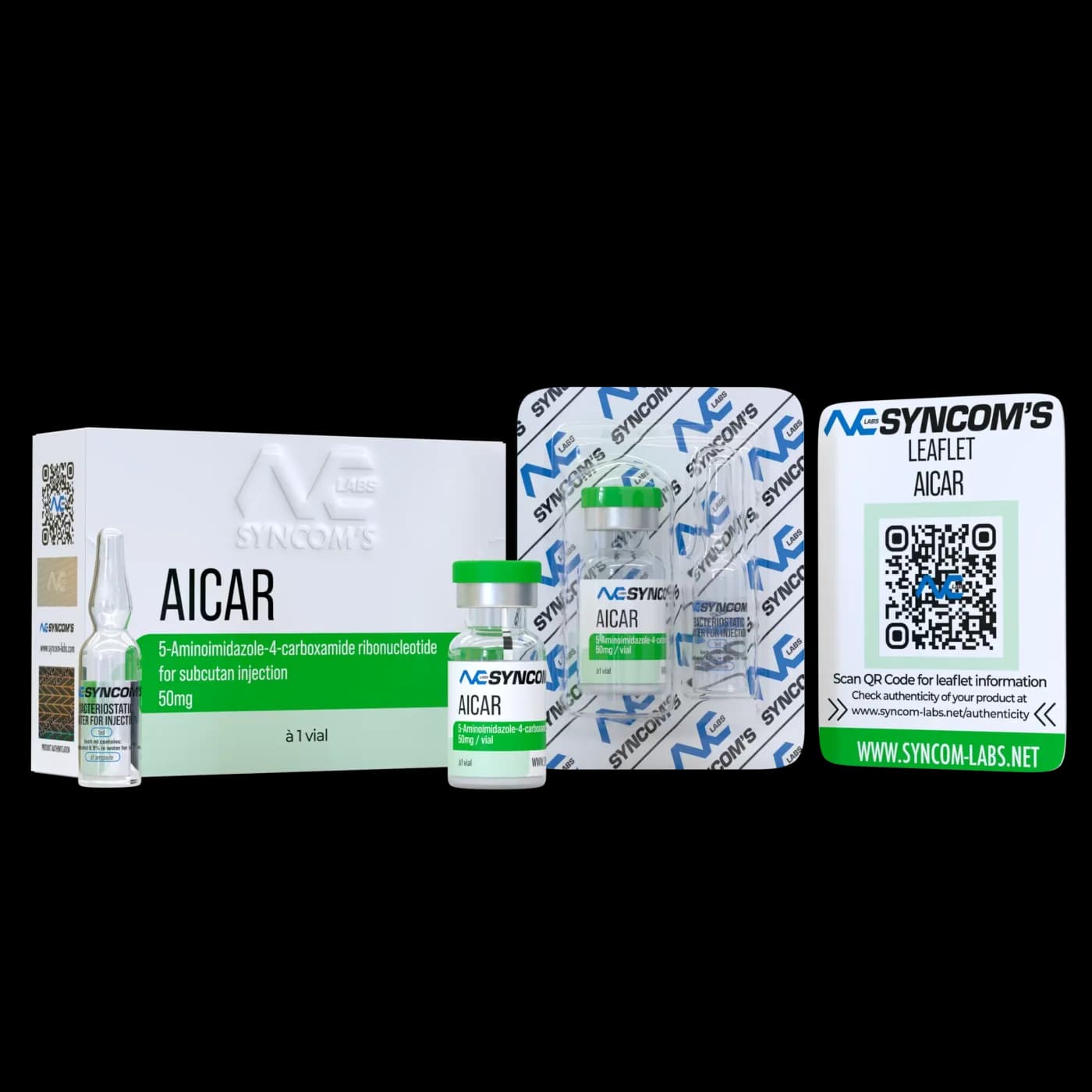
AICAR, an AMPK activator studied for endurance and metabolic research applications. For laboratory research use only.
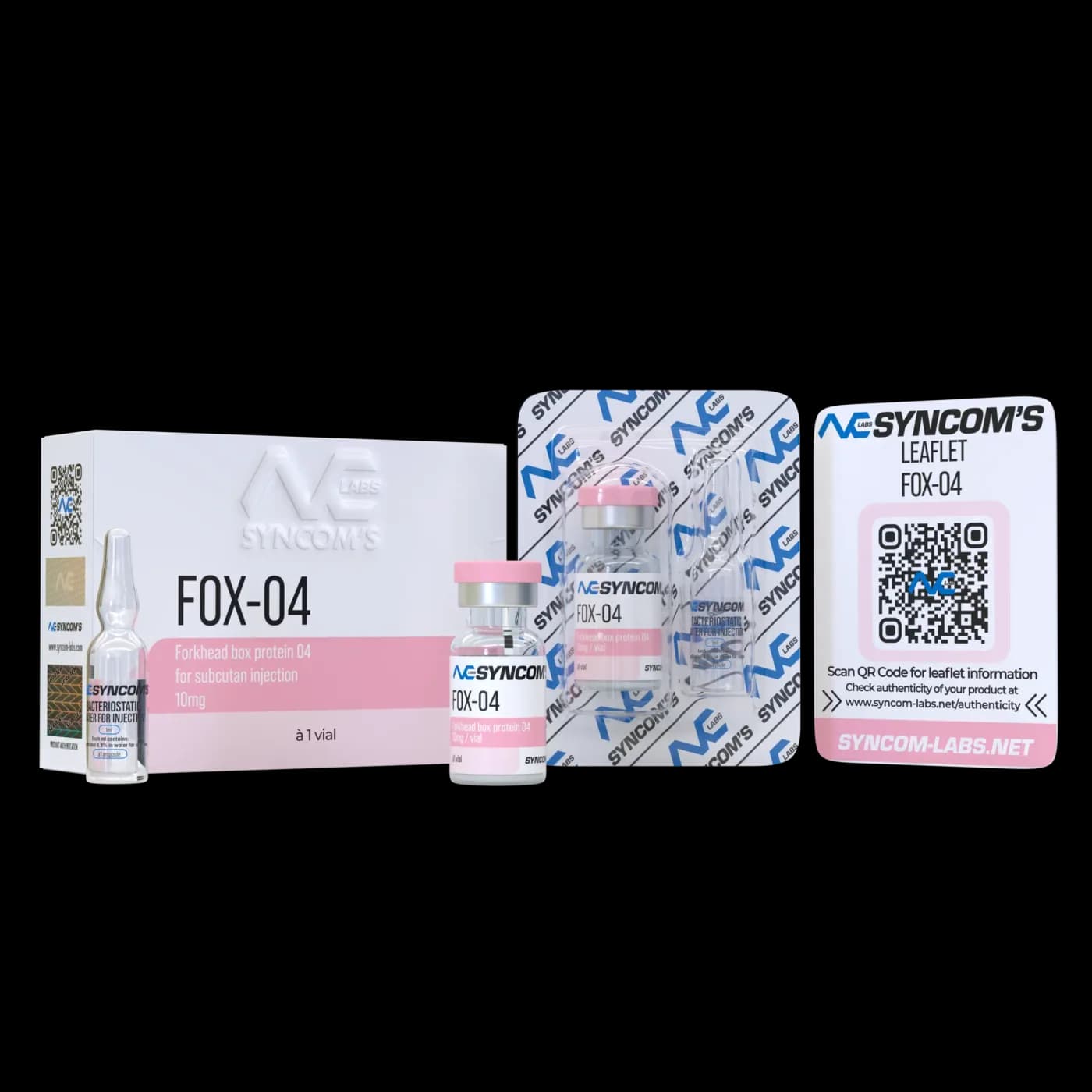
FOXO4-DRI, a senolytic peptide studied for selective clearance of senescent cells in ageing research. For laboratory research use only.