In stock
Fat Loss & Metabolic
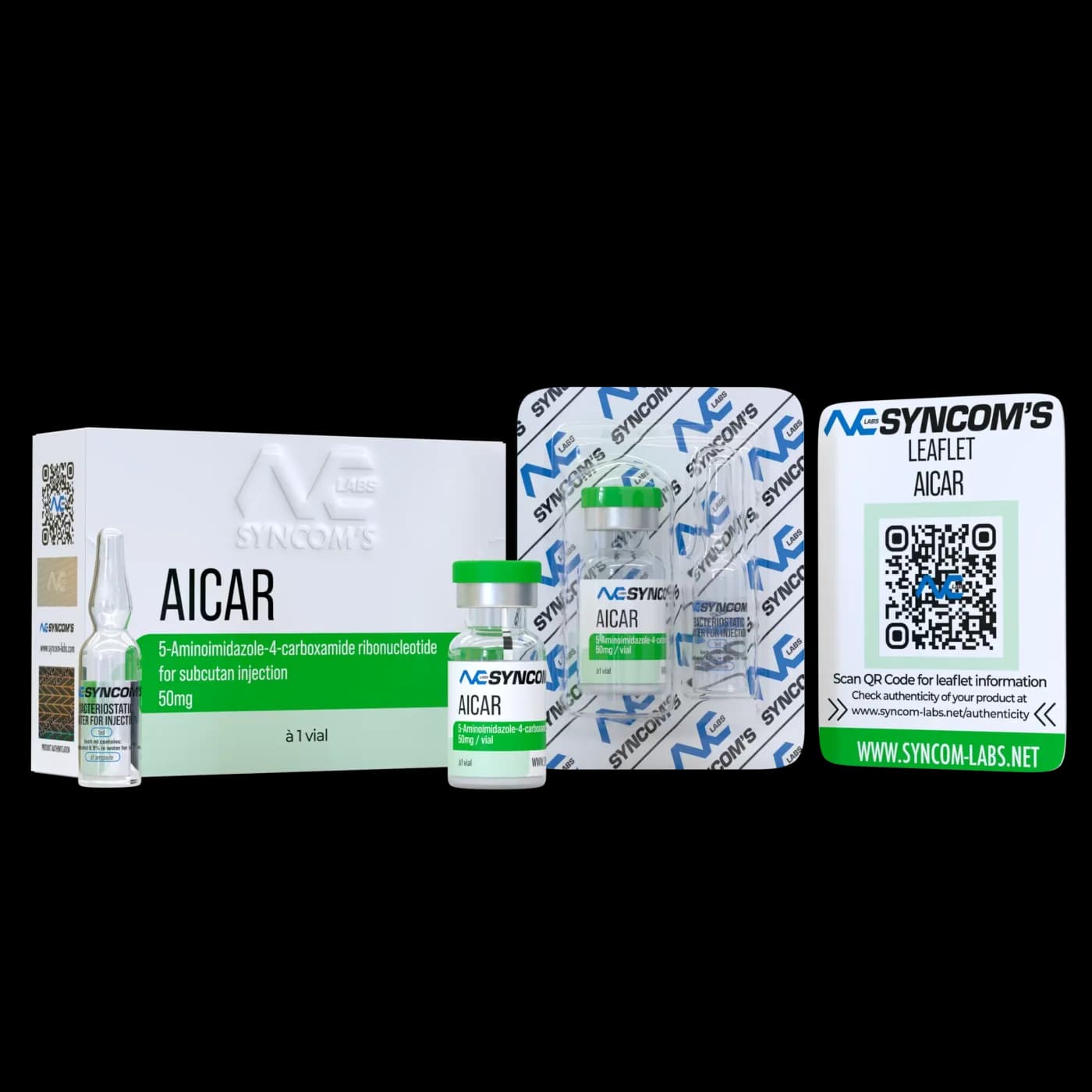
AICAR
AICAR, an AMPK activator studied for endurance and metabolic research applications. For laboratory research use only.
Vial
incl. VAT£49.90
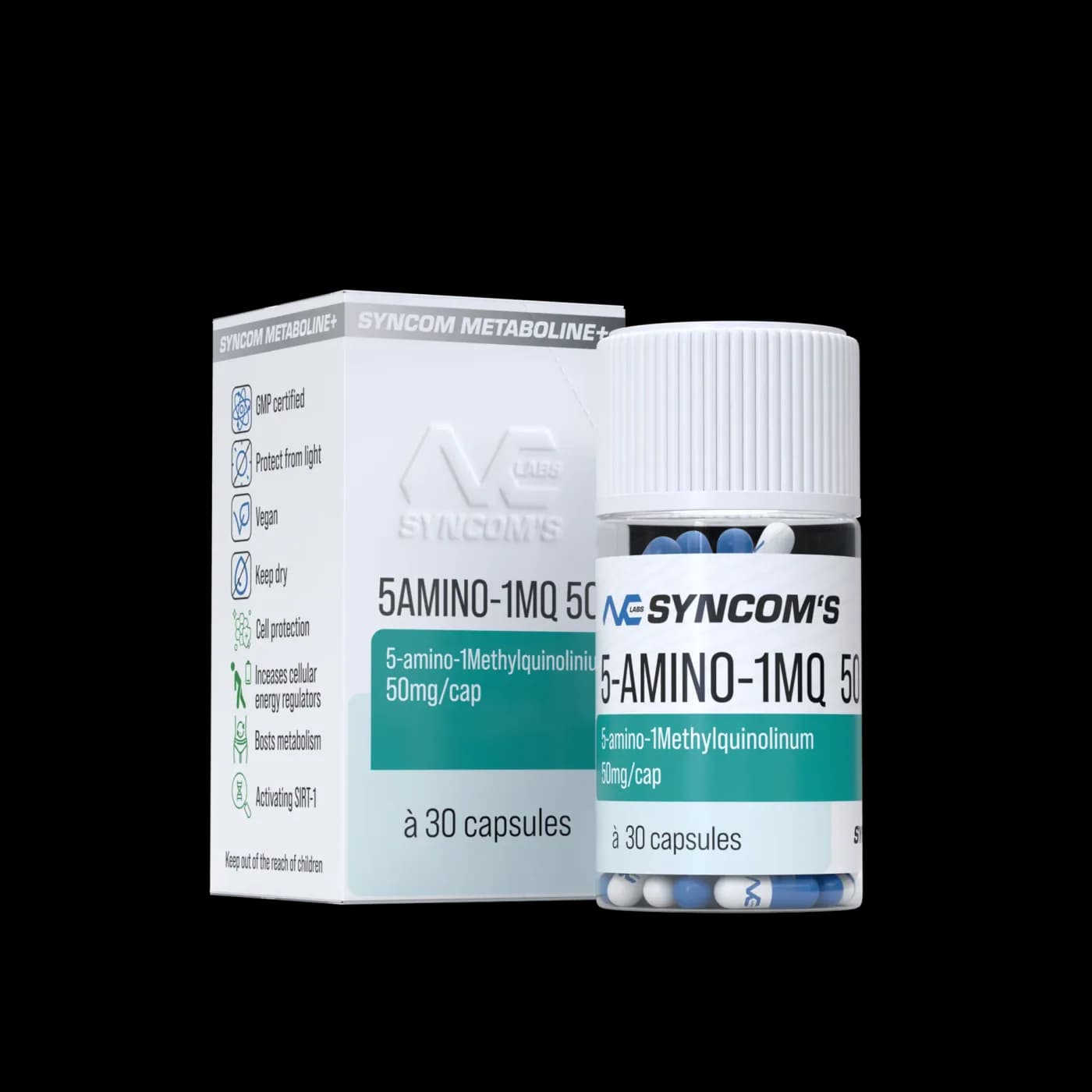
5-amino-1-methylquinolinium
Order before 12:00 on a working day and it ships today
Figures above are the release specification. The certificate shipped with your vial carries the measured values for that specific lot. Email [email protected] with an order number for the raw chromatogram.
5-Amino-1MQ, full name 5-amino-1-methylquinolinium, is a low molecular weight quinolinium salt with the cation formula C10H11N2+ and a parent mass of 159.2 g/mol. It is worth saying this clearly because catalogues keep filing it next to GLP-1 analogues and growth hormone secretagogues: 5-Amino-1MQ is not a peptide. There is no amino acid sequence, no SPPS, no disulfide bridges. It is a small organic cation, usually supplied as the chloride or iodide salt, that under bench conditions presents as a hygroscopic crystalline solid.
5-Amino-1MQ was identified in an Eli Lilly screening campaign aimed at nicotinamide N-methyltransferase (NNMT) and then taken up academically by Charles Brenner and colleagues at the Pennington Biomedical Research Center in Baton Rouge. The first widely cited paper, Neelakantan and co-workers in Biochemical Pharmacology in 2018, described 5-Amino-1MQ as a selective small-molecule inhibitor of NNMT and showed that in cultured adipocytes from obese donors it reduced adipogenic markers and lipid accumulation. That paper is the reason almost every subsequent NNMT inhibitor write-up references this molecule as the tool compound.
NNMT transfers a methyl group from S-adenosyl methionine (SAM) onto nicotinamide, producing 1-methylnicotinamide and S-adenosyl homocysteine. That single reaction does two awkward things at once. It drains SAM, the universal methyl donor that histone and DNA methyltransferases depend on, and it drains nicotinamide before it can be salvaged back into NAD+. In adipose tissue where NNMT is highly expressed, both pools get pulled down. 5-Amino-1MQ blocks NNMT at the substrate binding site and lets SAM and nicotinamide recover. That is the proposed link to the NAD+ rescue and sirtuin-substrate restoration story you will see in the literature.
The 5-Amino-1MQ on this listing is supplied as the chloride or iodide salt, lyophilised into an off-white to pale yellow crystalline solid. Lots ship at 98 percent purity or better by reverse-phase HPLC, with mass spectrometry confirming the 159 cation. Each vial leaves with a Certificate of Analysis tied to its lot number. If the CoA does not match the material in your hands we refund the order rather than argue about it.
This molecule is hygroscopic, so vials should come out of the freezer, equilibrate to room temperature with the cap on, and only then be opened. Sealed at minus 20 C and kept dry it is stable for years. It dissolves well in water and in polyglycol vehicles such as PEG400, and is usually buffered to a neutral pH for cell work. Stock solutions should be aliquoted to avoid repeated freeze-thaw. Light is not the main enemy here, humidity is.
UK orders placed Monday to Thursday before the afternoon cut-off ship the same working day in moisture-resistant packaging. Around 90 percent land within 48 hours. If you need gram quantities for an enzyme screening campaign rather than mg vials, message support and you will get a real quote from a person rather than a stacked cart. The same UK-hours team that answers reconstitution questions also handles CoA requests, so there is no escalation maze.
Sold strictly for in vitro laboratory research. Not for human or veterinary use. UK 18+.
Yes, 5-Amino-1MQ can be bought in the UK as a research chemical for laboratory use only. It is not a controlled substance and it is not a licensed medicine, so it holds no MHRA marketing authorisation and is not approved for human or veterinary use. We supply it strictly for in-vitro and pre-clinical research by qualified buyers.
We dispatch from within the UK, usually within 48 hours of a cleared order, on a tracked Royal Mail service. The lyophilised powder is stable at ambient temperature for transit, so it ships in a sealed vial without cold packs. Once it reaches your lab, move it to your usual storage. Tracking is emailed at dispatch.
The CoA reports the HPLC purity of the specific batch you receive, confirmed here at above 98 percent, alongside the identity check for the compound. It is batch-matched, meaning the figures belong to the lot in your vial rather than a generic reference. For research that depends on a known, characterised starting material, that batch link is the point of the document.
5-Amino-1MQ is a small-molecule, membrane-permeable inhibitor of NNMT (nicotinamide N-methyltransferase), the enzyme that converts nicotinamide to 1-methylnicotinamide while consuming SAM. Neelakantan and colleagues studied it in diet-induced obese mice, where eleven days of treatment was associated with reduced white adipose mass and higher NAD+ and SAM in fat tissue. All findings are from animal and cell models.
The molecular weight is 286.11 g/mol for the iodide salt supplied here, which is the figure to use for any stoichiometric calculation. Some listings quote 159.21 for the bare cation (C10H11N2+), which is why numbers vary across sites. The CAS number on file is 42464-96-0. The compound is a quinolinium salt, not a peptide, so there is no amino-acid sequence.
Store the sealed vial away from light, ideally cool and dry; the salt is yellow to yellow-orange and water-soluble, with DMSO as an alternative solvent. To reconstitute, run the diluent slowly down the vial wall rather than onto the powder to limit foaming. Keep a reconstituted stock at 2 to 8 degrees C and use it within the working window your protocol sets, typically a couple of weeks.
AICAR, an AMPK activator studied for endurance and metabolic research applications. For laboratory research use only.
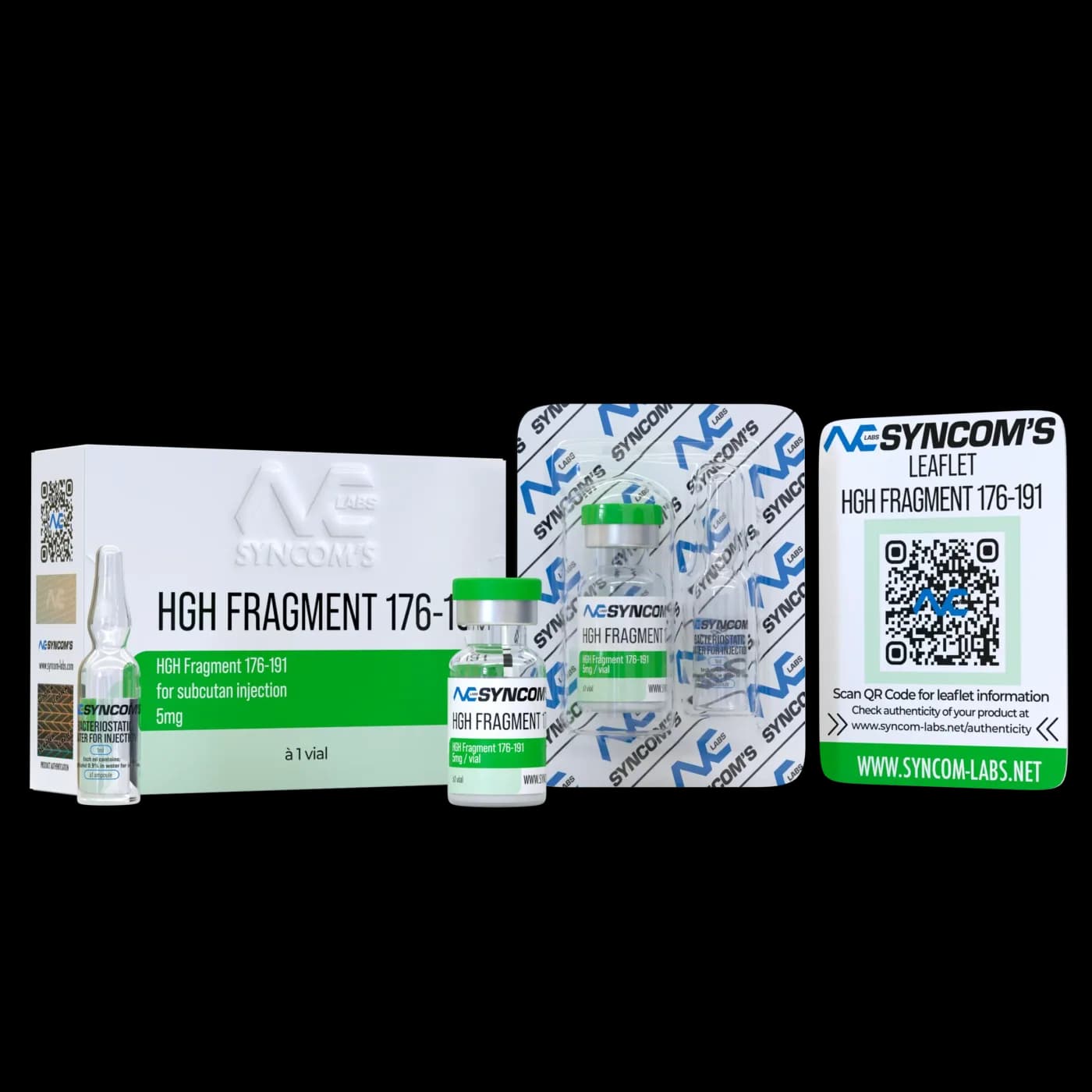
HGH Fragment 176-191, the C-terminal fragment of growth hormone studied for fat-metabolism signalling. For laboratory research use only.
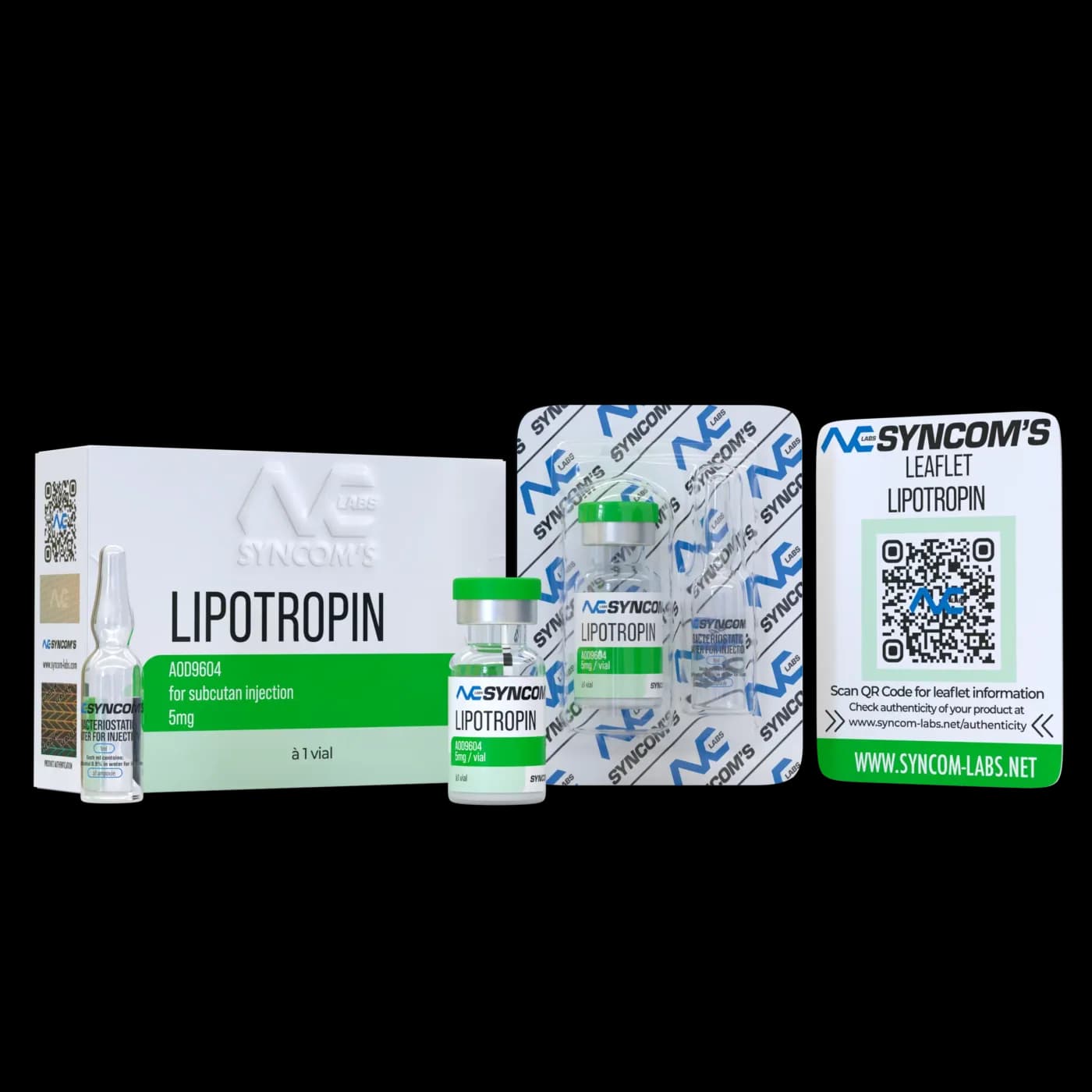
Lipotropin, a fat-metabolism peptide blend studied for metabolic research. For laboratory research use only.